Monday, July 29, 2013

July 2013 Books

My surprising obsession with World War II continues; I wrote a post about why on Josh's blog.

No Ordinary Time - Franklin and Eleanor Roosevelt: The Home Front In World War II by Doris Kearns Goodwin
Published: 1994
Rating: 5
1995 Pulitzer Prize for History
Goodreads

This is the first of several biographies I plan to read on Washington's first power couple. For a novice such as myself, Goodwin's book is an excellent start.  Beginning with the day that ended Europe's "Phony War", when Roosevelt learned of Hitler's invasion of Holland, Luxembourg and the Netherlands on May 9, 1940, Goodwin unveils the personal and political life of this unusual couple as they navigate the war of the century.

What I learned: about FDR:

  • Privledged life
  • Very close to his mother, Sara
  • Master politician - manipulator
  • Unfaithful husband
  • Paralyzed by polio at 39 years old
  • Kept his own counsel - "ice in his veins"
  • Could see the whole picture
  • Would not move without public opinion
  • Folksy fireside chats
  • Elected to an unprecedented four terms
About Eleanor Roosevelt:
  • Shy, awkward, unattractive daughter of beautiful, aloof mother
  • Alcoholic father
  • Niece of Theodore Roosevelt
  • Had 6 children (one died in infancy) but left rearing to her mother-in-law
  • Became FDR's eyes and ears after he was disabled by polio
  • After finding out about FDR's affair with Lucy Mercer, she no longer lived as his wife but continued as political partner.
  • Struggled with depression
  • Work-a-holic
  • Championed the underdog: children, women, Negros, laborers
  • A die-hard liberal
FDR's smart decisions:
  • Picked military leaders and let them run the war
  • 1940 - 1942 - Lend Lease policy which allowed US to give aid to Britain and Russia without entering the war.
  • Doolittle raid on Tokyo
  • Decision to invade North Africa first
  • Recapture of the Philippines
  • Production of B-29 Superfortress bomber
  • Spent enormous amount of federal money on research/development of atomic bomb
  • United Nations
FDR misses:
  • Did not push mobilization/production in 1940-1941
  • Did not do enough to protect small business
  • Sanctioned relocation of US citizens of Japanese descent.  
  • Holocaust -he felt the best way to relieve the suffering of the Jews in concentration camps was to end the war as quickly as possible.  He could've done much more. 

Unprecedented social change in America:

  • Great Migration: south to north, east to west and rural to city
  • Greatest redistribution of wealth - created the middle class
  • Post war economic boom
  • GI bill 
  • Mixed economy: government and consumer spending
  • New entrants into the workforce: women and Negroes


The Greatest Generation by Tom Brokaw
Published: 1998
Rating: 3
Goodreads

I have mixed feelings about this book. No doubt - the young men and women who grew up in the Great Depression, then fought the two-front war at home and overseas, and upon returning, contributed to the greatest economic boom of this country - deserve to be called "The Greatest Generation" and the more I learn about their sacrifice, the more indebted I feel.

However, Brokaw's book gives a one-sided view of those who came home, focusing on the ones who could put the war behind them and lead well-adjusted, productive lives.

I look forward to reading Thomas Childer's book, Soldier From the War Returning: The Greatest Generation's Troubled Homecoming From WWII, which will give a more realistic portrait of the emotional, psychological and physical challenges that faced veterans upon their return.

The Wild Blue: The Men and Boys Who Flew the B-24s Over Germany by Stephen E. Ambrose
Published: 2001
Rating: 3.5
Goodreads

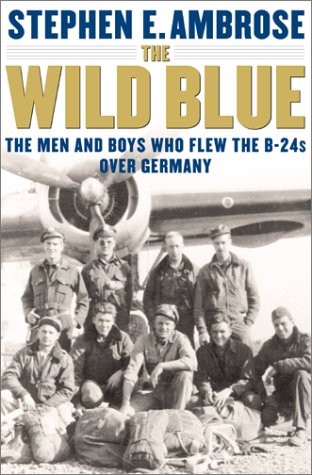
A quick read that focused on a B-24 Liberator pilot and his crew, stationed in Italy and tasked with bombing strategic targets such Germany's oil fields.  That pilot was George McGovern, later US Senator and 1972 presidential candidate.

What I learned:

  • The B-24's took a tremendous amount of physical and emotional strength to fly.
  • Pilots needed to complete 35 missions before they could go home.
  • Many young pilots died during training and so were pre-war casualties.
  • McGovern was part of the 15th Air Force which was not as famous as the 8th Air Force stationed in England.
  • Good descriptions of formation flying, flak, faulty bomb releases.
  • Cabins were not pressurized so the crew needed oxygen and endured sub-zero temperatures during missions.
  • Fighter support was crucial to bomber's success.
  • Mussolini's Italy was decimated.


Audiobook: Flag of our Fathers by James Bradley
Published: 2000
Rating: 4
Goodreads

An engrossing book which focuses on 5 Marines and 1 Navy corpsman who were immortalized in the iconic picture of World War II - the raising of the American flag on Iwo Jima.

John Bradley, the author's father was the corpsman who, after returning from the war, became a husband, father, successful small business owner and community leader.  He did not, however, speak of his war experiences or of this photo with his family.  

After his father's death in 1994, they found a few boxes containing war memorabilia in his closet which prompted James' quest to learn more about the 6 men in the photo - before, during and after the war - which, of course, included his father.

Add "To Watch and Read" list:

  • Movie: Flag of Our Fathers directed by Clint Eastwood
  • Movie: Letters from Iwo Jima directed by Clint Eastwood
  • Flyboys: A True Story of Courage by James Bradley
  • The Imperial Cruise: The Secret History of Empire and War by James Bradley

With the Old Breed by E.B. Sledge
Published: 1981
Rating: 5
Goodreads

Excellent personal memoir about an enlisted Marine's experience in WWII, specifically the Battle of Peleliu and Okinawa.  It is an honest, gritty, unembellished portrayal of war, shouldered by the men on the front lines.  Some of the scenes are unbelievably horrific.

He is a main character in Tom Hanks/Steven Spielburg's HBO production, The Pacific.

I plan to read his second book, China Marine which is a memoir about Marine life as part of the occupying forces in China.


We Band of Angels: The Untold Story of American Nurses Trapped on Bataan by the Japanese by Elizabeth Norman
Published: 1999
Rating: 5
Goodreads

The author stumbled upon references to the "Angels of Bataan and Corregidor" while researching her first book, Women at War: The Story of Fifty Military Nurses Who Served In Vietnam.  

These "angels" are the army and navy nurses who found their idyllic, island life on the Philippines turned upside-down on December, 1941 when Japanese bombs landed on Manila.  The US military under General Douglas MacArthur, woefully unprepared for enemy invasion,  retreated to the Bataan Peninsula for their first stand.  The nurses worked in two hospitals, set up in the jungle, not far from the front lines.  Before Bataan fell, the nurses were able to retreat to the Malinta Tunnel deep in Corregidor Island.

Unable to withstand the powerful Japanese forces, the army on Corregidor Island surrendered on May 6, 1942.  The POW nurses lived at the Saint Thomas Internment Camp (STIC) in Manila until liberated by MacArthur in February 1945, almost three years later.

What I learned:
  • Step-by-step fall of the Philippines to the Japanese.
  • "Europe First" policy left MacArthur to fend for himself, however with our decimated Navy at Pearl Harbor, it is unlikely the Philippines could have been saved. 
  • MacArthur's retreat to Corregidor Island earned him the bitter nickname: Dugout Doug
  • Bataan Death March
  • Nurse's grisly and harrowing work in jungle hospitals, close to the front lines of battle. 
  • Starvation, disease and death faced the nurses in STIC. 
  • The nurse's own "esprit de corps" saved them.
  • After liberation, the nurses, having lost an average of 30+ pounds were celebrities, used by the government to boost public support for the war. 
  •  Post homecoming - many felt disjointed, out-of-place, melancholic and depressed.
So glad I found this book on Amazon, in fact, it would make an inspiring movie.

Living Reed: A Novel of Korea by Pearl S. Buck
Published: 1963
Rating: 4
Goodreads

I am of Korean descent, but know very little of Korean history.  Partly because Asian history is not a focus in US schools but mostly because the subject of history, even that of my own race, was not of much interest.  That is, before reading Ken Follett's Winter of the World, a historical fiction novel about World War II.  Now, if one looked at my TBR pile, they would think I loved history.

So when I saw that Buck had written a novel about Korea, I ordered it from Amazon and read it within a couple of weeks.  Through the lens of one aristocratic family, Buck tells of Korea's tumultuous history from late 1800 - Korean War.

What I learned:
  • Political tension between Japan, China and Russia over Korea
  • Social tension between old and new religion/philosophy
  • 40+ years of brutal Japanese occupation
  • Courtship, marriage, role of women
  • Christianity in Korea
  • Teddy Roosevelt's foreign policy favored Japan over Korea
  • Communism vs democracy - a divided Korea
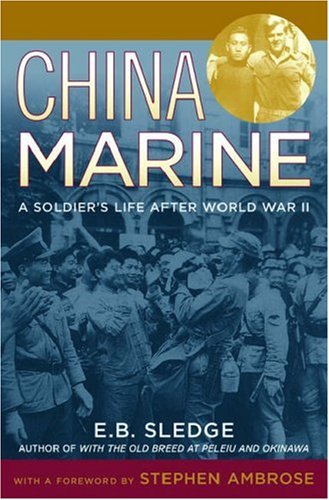
China Marine: An Infantryman's Life After World War II by E. B Sledge
Published: 2002
Rating: 4
Goodreads

Sledge continues his memoir of WWII, from learning about the Japanese surrender in Okinawa to being part of the occupying forces in Northern China, a "tinderbox of conflicting armed forces" to the difficult adjustment back to civilian life, typified by this scene which made it into HBO's The Pacific.

Sledge was signing up for school at Auburn University and trying to see if some of his Marine Corp training would qualify for college credit.  The girl behind the desk was getting flustered when she couldn't find course equivalency for weapons and tactics.
"Finally, in desperation, she slammed her pencil on the table and said in a loud, exasperated voice, "Didn't the Marine Corps teach you anything?!"  A gasp ran through the crowd, and you could have heard a pin drop.  I didn't lose my temper, but I realized that, like most civilians, war to this lady meant John Wayne or the sweet musical South Pacific.  
Slowly placing my hands on the table, aware that all eyes were on us, I said in a loud, calm, voice: "Lady, there was a killing war.  The Marine Corps taught me how to kill Japs and try to survive.  Now, if that don't fit into any academic course, I'm sorry.  But some of us had to do the killing - and most of my buddies got killed or wounded."  
In the preface, he writes about living with the "embedded trauma...the emotional equivalent of a sliver of steel shrapnel lodged near my heart."  I can relate to this.

A Marine's experience of the war, told in his own words, is so gripping.  I can feel him trying to express the inexpressible through the limited means of language.

Other memoirs to read:
  • Goodbye Darkness: A Memoir of the Pacific War by William Manchester
  • Red Blood, Black Sand: Fighting Alongside John Basilone from Boot Camp to Iwo Jima by Chuck Tatum
Audiobook - The Few: The American "Knights of the Air" Who Risked Everything to Fight in the Battle of Britain by Alex Kershaw
Published: 2006
Rating: 4
Goodreads

In 1940, while Britain was fighting for her life again Nazi Germany's quest to gain air superiority, it was illegal for any US citizen to fight for a foreign nation, even an ally.

Despite this policy, many American pilots joined the Royal Air Force, fought bravely alongside their aces and did their part to help save the RAF from destruction.  And with the loss of air domination, Hitler called off the invasion of England.

The reader of the audio book was very good - employing German, American, British and Australian accents when needed.  While driving in my car, I could envision the dogfights over the English countryside, her cities or the English Channel.   I could feel the pilot's intense relief in surviving another battle, along with the ensuing physical and emotional post-battle fatigue as well as the grief upon learning of a fellow pilot's death.

Other WWII books by Kershaw:
  • Escape From the Deep - about submarine U.S.S Tang
  • The Longest Winter - about the Battle of the Bulge
  • The Bedford Boys: One American Town's Ultimate D-Day Sacrifice
The Eagle Has Landed by Jack Higgins
Published: 1975
Rating: 2
Goodreads

This fictionalized account of Germany's attempt to kidnap Winston Churchill was uninteresting.  I now see that historical fiction can run the gamut on accuracy and authenticity.  I have to be more selective on what stories to read.


Tuesday, June 18, 2013

June 2013 Books


Ike: An American Hero by Michael Korda
Published: 2007
Rating: 4
Goodreads

Over the past 9 months I have been reading about WWII and the brave citizen soldiers who fought against Nazi Germany, Fascist Italy and Imperialist Japan.  This month, I wanted to learn more about the person who led the Allied forces to victory in Europe.  I also wanted to learn more about the post WWII era, (i.e. the Cold War).  Both goals were accomplished via two well-written biographies on the Supreme Commander of the Allied Forces in Europe and later, President of the United States from 1953 - 1961: Dwight D. Eisenhower.

Bullet points of interest that I jotted down in the front of the book:
  •  he had to deal with prima donna generals like Montgomery (huge jerk) and George Patton.
  •  Love triangle?  Ike, Kay Summersby and Mamie (wife)
  •  Korda makes constant comparisons to the Civil War such as Bastogne-Gettysburg and Ike-Grant.
  •  During the war, he was a huge chain smoker - up to 4 packs a day!
  • He is not buried in Arlington Cemetery, but rather in a small chapel on the grounds of the Eisenhower Presidential Library in his hometown of Abilene, Kansas.
Jobs after the war:
  • Leader of US Occupying Forces in Germany
  • Army Chief of Staff (replaced Marshall)
  • President of Columbia University
  • 1st Commander of NATO forces
  • President of the United States for 2 terms
Memoirs to add to the wish list?

By Eisenhower
  • Crusade in Europe 
  • At Ease: Stories I Tell to Friends
  • White House Years: Waging Peace, 1956-1961
By Churchill
  • 6 Volume History of World War II

Eisenhower: Soldier and President by Stephen E. Ambrose
Published: 1983
Rating: 4
Goodreads

This is the second Ambrose book I've read - the first was Band of Brothers.  I really like his writing: clear, concise and interesting.  He gives an unbiased accounting of Eisenhower's good and bad decisions as General and President.

What I learned:
  • Nixon was his VP for 8 years.  They had a formal, frosty relationship.  
  • Eisenhower ended the Korean War with an armistice.  He could not see a way to win without WWIII and a battle with the Russians.
  • He did not get sucked into other escalating areas such as Vietnam and Cuba.
  • President over 8 years of peace and prosperity.
  • He did not assert leadership during the Civil Rights Movement (I found this surprising).
  • U-2 incident (spy plane over Russia) which ended in international embarrassment. 
Other Ambrose books to read:
  • D-Day, June 6, 1944: The Climactic Battle of World War II
  • Citizen Soldiers
  • The Victors: Eisenhower and His Boys: The Men of World War II
  • Comrades: Brothers, Fathers, Heroes, Sons, Pals
  • The Wild Blue: The Men and Boys Who Flew the B-24s Over Germany

The Key to Rebecca by Ken Follett
Published: 1980
Rating: 3
Goodreads

A quick read about a ruthless German spy in Egypt feeding information to Rommel, a British spy-catcher and a beautiful Jewess.

This fictitious account reminds me of his other recently read works: Hornet Flight and Eye of Needle. 


The Odessa File by Frederick Forsyth
Published: 1972
Rating: 3
Goodreads

This book was referenced in Korda's biography on Ike, so I downloaded a sample, got hooked, bought the i-book and finished in a couple of days.

It is based on the true life account of the post-war activities of a ruthless SS officer, Otto Skorzeny, who set up "Odessa, the escape network for Nazi war criminals".


The Good Earth by Pearl S. Buck
Published: 1931
Rating: 5
Awards:  1932 Pulitzer Prize for Novel
Goodreads

I needed a break from WWII and felt hungry for good literary fiction.  I plucked this from my shelves and was hooked from the start.

The first book in her trilogy about the honest, hard-working farmer, Wang Lung and his family in pre-WWII China.  It was a best-seller in 1931 - 1932 and according to Wikipedia, the books apparently helped Americans consider the Chinese as allies in the upcoming conflict with Japan.

The second book of the trilogy, Sons was published in 1932 and the last book,  A House Divided in 1935.

Sons By Pearl S. Buck (# 2 in Good Earth trilogy)
Published: 1932
Rating: 3
Goodreads

As intimated by the title, this book focuses on the three sons of Wang Lung.  In contrast to the round characters in The Good Earth, the sons are flat and one-dimensional; therefore, not as interesting, hence the lower rating.

The social and historical context of pre-World War II China is what makes this trilogy fascinating.  The third son becomes a decorated soldier and with his inheritance, amasses an army and becomes a war lord in the north.  It is a very unstable time period as war lords constantly vie for more land, armies and power while revolution takes root and spreads in the south.

I know nothing of modern Chinese history so will probably read the third book in the trilogy to find out what happens to this family and their country.   I am already starting a list of books to read in the future:

  • Thunder Out of China by Theodore White
  • The Last Empress: Madame Chiang Kai-Shek and Birth of Modern China by Hannah Pakula
  • China Marine: An Infantryman's Life After World War II by E.B. Sledge

Audiobook: Unbroken: A World War II Story of Survival, Resilience and Redemption by Laura Hillenbrand
Published: 2010
Rating: 5
Goodreads
Author web site

WOW - what an awesome, inspiring story of Louis Zamperini, Olympic athlete (1936) turned US Army Air Force bombardier in WWII.

I did not know anything of this man's life before listening to the audiobook which made it that much more enjoyable.  His story needed to be told and I am glad Hillenbrand stumbled upon it while conducting research for her first book, Seabiscuit. 

What he endured during the war is truly mind-boggling, defies comprehension and elicited many verbal outbursts (OMG, no way, you've got to be kidding me, what? really?), complete with head shaking and slapping of the steering wheel while driving alone in my car.  Anyone viewing must've thought I was a bit loco.

I love Hillenbrand's writing - so clear, concise, strong and vivid.  One would never know she suffers terribly from chronic fatigue syndrome and is therefore completely housebound, living vicariously through her research and writing - read interview.

I've seen the movie Seabiscuit and loved it, but now want to read her book.  I am a big fan and can only hope that she finds another interesting subject worthy of her writing.


Helmet For My Pillow: From Parris Island to the Pacific by Robert Leckie
Published: 1957
Rating: 5
Goodreads

Another WOW book about a budding, 21-year old journalist Robert Leckie, who enlisted in the US Marine Corp in January 1942 and fought at Guadalcanal, Cape Gloucester and Peleliu where he was wounded by a blast concussion and evacuated to a field hospital.   He is one of the main characters in the Hanks/Spielburg HBO mini series, The Pacific.

He decided to write this memoir in 1951 after seeing the Broadway musical, South Pacific, in order to "tell the story of how it really was.  I have to let people know the war wasn't a musical." (wikipedia article).  He accomplished his goal.

A beautifully written literary memoir about how one goes from being a young patriotic man-boy to a well-trained killer/soldier, ready to fight a ferocious and brutal Japanese enemy - for his country, yes, but even more so, for his fellow Marines - esprit de corps.

Some of my favorite passages:
A soldier's pack is like a woman's purse: it is filled with his personality. 
And there is terror, coming from the interaction of trial and tedium: the first, shaking a man as the wind in the treetops; the second, eroding him as the flood at the roots.  Each fresh trial leaves a man more shaken than the last, and each period of tedium - with its time for speculative dread - leaves his foundations worn lower, his roots less firm for the next trial.
Upon seeing a detached hand:
I turned to go, and as I did, nearly stepped on someone's hand.  "Excuse me," I began to say, but then I saw that it was an unattached hand, or rather a detached one.  It lay there alone - open, palm upwards, clean, capable, solitary.  I could not tear my eyes from it.  The hand is the artisan of the soul.  It is the second member of the human trinity of head and hand and heart.  A man has no faculty more human than his hand, none more beautiful nor expressive nor productive.  To see this hand lying alone, as though contemptuously cast aside, no longer a part of a man, no longer his help, was to see way in all it wantonness; it was to see the especially brutal savagery of our own technique of rending, and it was to see men at their eternal worst, turning upon one another, tearing one another, clawing at their own innards with the maniacal fury of the pride-possessed. 
His descriptions of living and waging war in the jungle are unforgettable.

After publishing his memoir, he went on to be a prolific writer of military history.   The following are ones that I would like to read:

  • Strong Men Armed: The U.S. Marines Against Japan (1962)
  • Conflict: The History of the Korean War (1963)
  • Challenge for the Pacific: 6 Month Battle of Guadalcanal (1968)
  • Delivered From Evil: The Saga of WWII (1987)
  • The March to Glory: Battle of Chosin Reservoir (1990)
  • Okinawa: The Last Battle of WWII (1995)
  • Wars of America (1998)

Sunday, May 26, 2013

May 2013 Books

My foray into WWII continues.  I am also reading posts from last month's Poetry Blog Tour, hosted by Savvy Verse & Wit.

Hornet Flight by Ken Follett
Published: 2002
Rating: 4
Goodreads

A quick read by the master of historical fiction.  This tale is about the Danish resistance during WWII.  It is a critical time in the war - Germany has invaded Russia and Churchill fears Russia will fall soon unless the British can divert Germany's mighty Luftwaffe's (air force) focus back to protecting the homeland.  Thus an all-out blitz of RAF's Bomber Command is scheduled but they need intelligence on Germany's radar capability and how to elude it.  The main radar station is in Denmark.

The afterward tells the important and often un-sung work done by courageous resistance fighters:
The Danish Resistance eventually became one of the most successful underground movements in Europe.  It provided a continuous flow of military intelligence to the Allies, undertook thousands of acts of sabotage against the occupying forces, and provided secret routes by which almost all Denmark's Jews escaped from the Nazis. 

The Caine Mutiny by Herman Wouk
Published: 1951
Rating: 5
Prizes:  1952 Pulitzer Prize for Fiction
Goodreads

Excellent book - I loved it and would highly recommend.

While I decided to read The Caine Mutiny because of the WWII connection, I would actually categorize this novel as a psychological thriller with WWII as its backdrop. It is a story of how rational men, confined in a small space (minesweeper) under extreme pressure and operating under strict military rules of behavior within a set chain of command will act in the hands of a madman.   A similar story could be told about adult behavior in a strict, religious construct or within a family ruled by a tyrannical, psychotic and abusive father.

What makes this work compelling is that Herman Wouk's experience in WWII on two destroyer minesweepers is captured so succinctly that the reader knows what it was like for the sailors and officers:
Another day and another passed of rough seas and lowering skies; of rolling and pitching, cold winds, and cold damp eating into bones softened by tropic warmth; of a treadmill of watches in a wheelhouse dank and gloomy by day and danker and gloomier by night; of sullen silent sailors and pale dog-tired officers, of meals in the wardroom eaten in silence, with the captain at the head of the table ceaselessly rolling the balls in his fingers and saying nothing except an infrequent grumpy sentence about the progress of the work requests....the world became narrowed to a wobbling iron shell on a waste of foamy gray, and the business of the world was staring out at empty water or making red-ink insertions in the devil's own endless library of mildewed unintelligible volumes. 
Back on the ship after shore leave:
There would be hundreds of thousands of miles of steaming, and probably many battles, before the ship would come into these waters again with its bow pointed the other way.  The sun, dead ahead, sinking beneath ragged banks of dark clouds, shot out great spokes of red light which fanned across the western sky.  It was an uncomfortable similitude of the flag of Japan....Willie closed his eyes, listened with pleasure to the hum of the ventilators, and felt in his bones the vibration of the main engines, transmitted through the springs of his bunk.  The ship was alive again. He felt warm, and safe, and at home.  Drowsiness came over him almost at once, and he slept deliciously. 
Eccentricities, those fungi of loneliness and boredom, began to flourish on the Caine.
The awesome responsibility that a ship captain feels:
...a shrinking of his personal identity, and a stretching out of his nerve ends to all the spaces and machinery of his ship.  He was less free than before.  He developed the apprehensive listening ears of a young mother; the ears listened on in his sleep; he never quite slept, not the way he had before.  He had the sense of having been reduced from an individual to the sort of brain of a composite animal, the crew and ship combined.  The reward for these disturbing sensations came when he walked the decks.  Power seemed to flow out of the plates into his body. 
The psychological affect on the protagonist, Willie Keith, serving under a strange, psychotic captain named Queeg:
Willie began to develop a deep, dull hate for Queeg. It was nothing like the boyish pique he had felt against Captain De Vriess.  It was like the hate of a husband for a sick wife, a mature, solid hate, caused by an unbreakable tie to a loathsome person, and existing not as a self-justification but for the rotten gleam of pleasure it gave off in the continuing gloom.
I recognize the same dual-time disconnect that Styron brings up in Sophie's Choice - see post.
Willie stared at the holocaust for a minute or so, while a warm fragrant breeze fanned his face...then Willie sat at his place again, and dug his spoon into the mound of white cream attractively laced with brown.  It occurred to him that there was an unsettling contrast between himself, eating ice cream, and marines on Namur a few thousand yards away, being blown up.  He was not sufficiently unsettled to stop eating the ice cream, but the thought worked around like grit in his mind.
And an example of a kairos moment in Willie's life:
With the smoke of the dead sailor's cigar wreathing around him, Willie passed to thinking about death and life and luck and God.  Philosophers are at home with such thoughts, perhaps, but for the other people it is actual torture when these concepts - not the words, the realities - break through the crust of daily occurrences and grip the soul.  A half hour of such racking meditation can change the ways of a lifetime.  Willie Keith crushing the stub in the ashtray was not the Willie who had lit the cigar.  That boy was gone for good.


Citizens of London: The Americans Who Stood With Britain in its Darkest, Finest Hour by Lynne Olson
Published: 2010
Rating: 4
Goodreads

I picked this book up in March at the Shakespeare & Co bookstore on the upper East Side in NYC.

The book focuses on three Americans who made London their home during the darkest days of the war.  They were immersed in British politics and society and used their influence to shape policy and public opinion in both England and America.

What I learned from this highly recommended book:

  • Life in London during the worst of the Blitz when the city was bombed for 57 straight nights.
  • The resiliency of the British people and the amazing volunteerism that arose to tackle domestic problems that the government could not handle such as the crucial task of making the numerous shelters bearable.
  • Changing of the US ambassador to England from isolationist Joseph Kennedy to New Hampshire governor, John Gilbert Winant, who became a well-known and beloved figure to the British monarchy, prime minister, military leaders and general public.  
  • England became the base of US military operations which meant the enormous influx of American GI's in British cities and countryside.  Despite speaking the same language, the cultural and stereotypical barriers were huge.  The British described American soldiers as "over-paid, over-sexed and over here" while Americans remembered the British as the "murderous redcoats who tried to destroy the infant United States during the Revolutionary War".  There was also a healthy dose of skepticism regarding the British colonial policies; the Americans were interested in freeing Europe/Far East from Nazi/Japanese tyranny, not upholding the British Empire. 
  • FDR made unilateral decisions in foreign policy, working with Churchill directly and by-passing Winant's role - much to his frustration.
  • Two other Americans were W. Averell Harriman, head of the Lend-Lease program and Edward R. Murrow, head of CBS news in Europe.  He produced the famous radio broadcasts that educated America on the European War.
  • Very sad and shocking end to Winant's life.  

Eye of the Needle by Ken Follett
Published: 1978
Rating: 4
Goodreads

Another quick read where Follett surmises that one of Hitler's most trusted and ruthless spies, code name Needle, has discovered the truth regarding the Patton ruse, meant to trick the Germans into thinking the cross-channel invasion would be at Calais, rather than the beaches of Normandy.

British intelligence track The Needle to a small island where he is going to alert Germany via radio broadcast and then rendezvous with a U-boat for the trip back home.  The only person in his way is a beautiful, courageous young mother resulting in a nail biting ending.

Saturday, May 4, 2013

April 2013 Books

April was a month of quality over quantity with only three books read, but all rated a 5 - the highest number possible.


Eat Right 4 Your Type and Cook Right 4 Your Type by Dr. Peter D'Adamo
Published: 1997 and 1998
Rating: 5
Goodreads
Author's web site

I was sidelined this month by a medical emergency (bleeding ulcer) which put me in the hospital needing a blood transfusion - the second time in five years.  I also needed an endoscopy and when the anesthesia wore off, the nurse next to my bed talked about the premise of eating for your blood type, researched and championed by Dr. Peter D'Adamo.  And while my doctor swears that food/drink has absolutely no correlation to ulcers, I have to wonder, especially after reading this very compelling book.

The first premise is this:  "Blood type is not a neutral factor.  Rather, it behaves as the control valve of your immune and digestive systems, a biological watchdog that enhances your body's ability to survive and thrive."

The second premise: "Each of the four blood types evolved in response to both the physiologic development of the species and changing climactic conditions over the eons since humankind first trod the Earth.  The adaptations that occurred in the course of evolution not only strengthened our immune systems against new bacterial, viral, and environmental assailants, but at the same time permitted our vulnerable digestive systems to adapt to a wide range of unfamiliar foods."

Linking blood type to diet: Each blood type responds positively and negatively to proteins in certain foods.  These proteins are called lectins and "have agglutinating - gluing or sticking - properties that affect your blood.  When you eat a food containing protein lectins that are incompatible with your blood type antigen, the lectins target an organ and begin to agglutinate blood cells in that area.  In effect, lectins gum up the works, interfering with digestion, insulin production, food metabolism, and hormonal balance."

I have been on the diet for three weeks and feel good.  I am much more conscious of what and how much I am eating so my meals are healthier, portions are less, and interestingly, I do not crave the main negatives for Type B: chicken, tomatoes and wheat.

Egoscue Method of Health Through Motion by Pete Egoscue
Published: 1992
Rating: 5
Goodreads

I am an aerobics instructor, teaching several spinning/cycle classes a week, and need to take continuing ed classes to keep my certification current.  A number of years ago, in one of my classes, the instructor recommended this book.  At the time, I found the exercises extremely helpful in improving my posture and releasing the tension in my upper back, shoulders and neck.

I dug out the book this month and re-read as my upper body tension was so bad, I could literally feel the knots throb all the time.  It was affecting my ability to sit comfortably at work and made it difficult to sleep.  After a quick re-read and faithfully doing the 13 exercises every day (takes about 20 minutes), all the tension is gone!

If you ache from tight, tense muscles, I would highly recommend.


Sophie's Choice by William Styron
Published: 1976
Rating: 5
Goodreads
See post on Josh's blog

Wow - I loved it. So much so that I deliberately slowed down my usually fast reading pace to savor, write down questions I had while reading, write down quotes that I loved, looked up words that I did not understand and added them to my lexicon (there were many), and thought about Styron's style, technique and framework while walking my dogs.


People have said this is a semi-autobiographical book and I would agree.  Both Styron and his protagonist, Stingo graduated from Duke University and were in the Marine Corps during WWII.  As a successful middle-aged novelist, Stingo/Styron writes about the painful and life-changing summer of 1947 when as a virginal twenty-two year old wannabe writer, he meets the tragically beautiful Sophie Zawistowska and her mad but brilliant lover, Nathan Landau.

Written in the first person, I would also describe the work as a "fictional memoir".  As a reader, we are always aware that Stingo is writing about the past and yet, when a scene is described, we are right there, just as he remembers it,

Is Stingo a reliable narrator?  I believe so for he is not reticent about revealing unflattering facts about himself and seems determined to "tell it like it was" - the good, bad and ugly and there is a lot of ugly.

Suicide is a theme that runs through the book which is interesting considering that at the time, Styron was not suffering from depression and suicidal ideation as he did later in life.  He wrote about it in a highly popular memoir, Darkness Visible, published in 1990, which I read last year - see post.

Some of my favorite quotes:

We learn early on that Sophie is a Auschwitz survivor.  Here is a description of how she shops for lunch at a Brooklyn deli, forever changed by her months of starvation.
The privilege of choice gave her a feeling achingly sensual.  There was so much to eat, such variety and abundance, that each time her breath stopped, her eyes actually filmed over  with emotion, and with  slow and elaborate gravity she would choose from the sourly fragrant, opulent, heroic squander of food: a pickled egg here, there a slice of salmi, half a loaf of pumpernickel, lusciously glazed and black.
Stingo, in writer's paradise, where everything comes so easily:
..I breathed a delicious sigh and felt the next scene hatching, so palpable I could almost reach up and fondle it, like a fat golden egg in my brain.
Stingo, on the beach, describing himself vs the other bronzed bathers:
Sharecropper-white with pink elbows and chafed knees, I felt wan and desiccated amid these bodies so richly and sleekly dark, so Mediterranean, glistening like dolphins beneath their Coppertone.  How I envied the pigmentation that could cause one's torso to develop this mellow hue of stained walnut.
Grief, pain, heartache and loss are described so accurately, I plan to write a post on Josh's blog about certain quotes and how they touched me.

I want to see the movie starring Meryl Streep as Sophie with a box of tissues as my only companion.  I would also like to read some of his other works, namely The Confessions of Nat Turner with which he won the 1968 Pulitzer Prize for fiction.

The book fits perfectly in my WWII reading theme.  In fact, in this fictional memoir, before Stingo/Styron gets ready to write about Sophie's experience in Auschwitz, he gives a list of authors that helped in his research.  I googled each one and wrote them in my book diary for future reference/reading.

  • This Way for the Gas, Ladies and Gentleman and We were in Auschiwitz by Tadeusz Borowski.  Tragically, he committed suicide at 28 years old, 3 days after the birth of his daughter.
  • Essays - Language and Silence by George Steiner
  • Treblinka by Jean-Francois Steiner
  • Five Chimneys: A Woman's True Story of Auschwitz by Olga Lengyel
  • The SS State: The System of the German Concentration Camp by Eugen Kogon
  • The Last of the Just by Andre Schwartz-Bart.  I've downloaded a sample of this novel into my iPad.
  • Anything written by Elie Wiesel.  I am particularly interested in his 2-volume memoir: All Rivers Run To the Sea + And the Sea is Never Full.


Saturday, March 9, 2013

March 2013 Books

The End of Your Life Book Club by Will Schwalbe
Published: 2012
Rating: 5
Goodreads

Last Friday, I was in NYC with my daughter.  We were going to the hospital to visit my father who is recovering from surgery, when we came out of the subway and lo and behold, there was Shakespeare and Company Booksellers on 68th and Lexington!

We stopped in and over $100 later, this memoir was in my stash of finds along with New and Selected Poems: Volume One by Mary Oliver, Citizens of London: The Americans Who Stood With Britain in it's Darkest, Finest Hour by Lynne Olson, On Being Ill by Virginia Woolf, Bound to Last: 30 Writers on their Most Cherished Books edited by Sean Manning and cute thank you cards with "Merci" and the Eiffel Tower on the front.  I also bought my daughter The American Heiress by Daisy Goodwin.

I had heard of this book, written by a son whose love of books was shared by his mother who had been diagnosed with pancreatic cancer.  During the last two years of her life, they formed a "book club" that was born out of conversations around books during the multi-hour chemo treatments.

I read half of this engaging memoir that night: dog-earring, underlining and writing a list of interesting books that I might want to read in the front (before discovering a nice alphabetized list in the appendix), and read almost to the end while on the bus back to DC the next day.

I say "almost" because the last chapters were about his mother's death, and since tears were expected, I needed to be alone.  For I've learned that crying while reading is most free and cathartic when done in private.

Any bibliophile will love this book for it is a celebration of how books can impact our lives.  And how an "extraordinary, ordinary" (as he describes his mother in this interview) woman's love of the written word is passed onto her children and in her dying months, offers a common ground for conversations around such important topics as death, grief, family, faith, purposeful living, etc.

I especially like this quote about books vs e-books.
One of the many things I love about bound books is their sheer physicality.  Electronic books live out of sight and out of mind.  But printed books have body, presence.....I often seek electronic books, but they never come after me.  They may make me feel, but I can't feel them.  They are all soul with no flesh, no texture, and no weight.  They can get in your head but can't whack you upside it.
As his mother takes her last breaths, Will looks around and sees that she is surrounded by her books.
...."a wall of bookshelves, books on her night table and a book beside her.  Here were Stegner and Highsmith, Mann and Larsson, Banks and Barbery, Strout and Nemirovsky, the Book of Common Prayer and the Bible.  The spines were of all colors, and there were paperbacks and hardcovers, and books that had lost their dust jackets and ones that never had them.   
They were mom's companions and teachers.  They had shown her the way.  And she was able to look at them as she had readied herself for the life everlasting that she knew awaited her.  What comfort could be gained from staring at my lifeless e-reader?
She died on September 14, 2009 - almost 6 months after my Josh.  I applaud Schwalbe for writing this poignant memoir that will keep his mother's memory alive, long after her death.  Maybe this is why I continue to write on Josh's blog for I feel a similar need to keep his memory alive.

Brideshead Revisited by Evelyn Waugh
Published: 1945
Rating: 3.5
Goodreads

When this book was made into a British TV mini-series over 30 years ago, Jeremy Irons played the protagonist and narrator, Charles Ryder.  He also performs the audiobook that I picked up from the library.  It was a pleasure listening to his smooth, silky voice change pitch, tone and accent based on the various characters: best friend and lover, Sebastian Flyte; his beautiful independent sister,  Julia Flyte;  aristocrat, Lady Marchmain; Oxford don, Mr. Samgrass; fellow Oxford student, Anthony Blanche; Canadian rogue, Rex Mottram; injured German, Kurt; and society-conscious wife, Celia.

I kept the paperback in the car so when I heard a particularly beautiful sentence, phrase or description, I dog-earred the page; there are many.

So why a rating of 3.5?  While I loved the prose, I didn't particularly like any of the characters and so hardly cared what happened to them.  Additionally, while listening, I had many questions which I ended up writing on the first blank page of the book.  After completing the book, my questions remained.

It is more clear to me now that as a reader, I am subconsciously asking questions about the characters, situations, scenes, plot and story and expect these to be answered in some fashion by the end.  I may not like the answers but that is better than not having them at all.  Despite that, I enjoyed the language.  Here are some of my favorite quotes:

I found this passage beautifully written and so descriptive that I could see, taste and smell the berries, wine and smoke.
On a sheep-cropped knoll under a clump of elms we ate the strawberries and drank the wine...they were delicious together - and we lit fat Turkish cigarettes and lay on our backs, Sebastian's eyes on the leaves above him, mine on his profile, while the blue-grey smoke rose, untroubled by any wind, to the blue-green shadows of foliage, and the sweet scent of the tobacco merged with the sweet summer scents around us and the fumes of the sweet, golden wine seemed to lift us a finger's breadth above the turf and hold us suspended.
Charles' first impression of Sebastian:
He was magically beautiful, with that epicene quality which in extreme youth sings aloud for love and withers at the first cold wind.
And of Julia:
Because her sex was the palpable difference between the familiar and the strange, it seemed to fill the space between us, so that I felt her to be especially female as I had felt of no woman before.  
Sharp Objects by Gillian Flynn
Published: 2006
Rating: 4
Goodreads
Author web site

In the "For Readers" tab on her web site, Gillian Flynn talks about why she wrote this book:
Libraries are filled with stories on generations of brutal men, trapped in a cycle of aggression. I wanted to write about the violence of women.... I particularly mourn the lack of female villains — good, potent female villains....I’m talking violent, wicked women. Scary women. 
This is an interesting point; one which I had not really pondered.  As it happens, I am listening to the audiobook, Crime and Punishment by Fyodor Dostoesvsky and while driving home today from a local coffee shop, was listening to Raskolnikov's dream in which drunken men brutally killed a thin old mare who, being unable to gallop pulling a cart full of people, was sentenced to death via whip, thick wooden shaft and iron crow bar.  It was the drunken owner and his equally drunk friends who delivered the blows across the rib, back, face and even in the eyes (very difficult to listen to this violence and brutality) while the women laughed.

How would this have read if women were doing the beating?  It is difficult to imagine women being capable of this kind of senseless cruelty but Flynn would say they are and it is time for novelists to uncover this sordid fact.   If this is what she wanted to do, I would say she succeeded.  The antagonists in her debut novel are malevolent, horrible, cruel, evil females.  The consequences of their baseness on the poor victims is gut-wrenching.

Flynn's prose is succinct and concise - my borrowed paperback was just over 250 pages - easily read in two sessions; a haunting, psychological thriller.

Half a Life: A Memoir by Darin Strauss
Published: 2011
Rating: 4
Good reads

In the first sentence of his poignant memoir, Strauss says, "Half my life ago, I killed a girl."

Both he and the girl were sixteen years old.  It was ruled an accident so he was not charged; he was free.  But was he really?

Despite keeping this tragic event a secret for eighteen years, it haunted him.  But it wasn't until he was married and the father of twins that he finally started writing about it, resulting in this memoir.  There is much in this book that resonates with me; I plan to write a post on Josh's blog.

Here, however, are a few sentences that I really liked:

How he describes that irrevocable moment - like poetry:
Pretty girl on a bike, a shy little thud, hysterical windshield.  And I'm somewhere in there too, trying to swerve, trying to disappear.
Good analogies:
West Shore Road follows the turns of the Long Island Sound like a tag-along sister. 
At the church door I took a shaky gulp and wrapped my palms around the handles and my heart was a live bird nailed to my chest.


Tuesday, February 26, 2013

February 2013 Books

War and Remembrance by Herman Wouk
Published: 1978
Rating: 5
Good read
Author web site

The story picks up where The Winds of War left off: Pearl Harbor has been bombed and in one stroke, America abandons her isolationist policy and declares war on Japan which leads to Germany declaring war on the US.

Storytelling is an art, especially when the subject matter is as massive and well chronicled as WWII.  And Wouk is the supreme artist.  Continuing the saga of fictitious US naval officer Victor "Pug" Henry and his family, and using various literary techniques listed below, Wouk paints a graphic, unforgettable portrait of this global war, displaying the spectrum of human action - from heroic to inconceivable barbarism.

  • Translated summary of war:  This device has continued from The Winds of War.   At deliberate intervals, Wouk inserts Pug's translations and commentary on sections of General Armin Von Roon's World Holocaust.  In it, Roon discourses on Hitler, the major battles, the "Jewish problem" and the Nazi's cold, calculated solution.  It is a clever and effective way of providing the Nazi viewpoint. 
  • Diary excerpts:  In his private journal, prominent American author Aaron Jastrow writes about his attempts, along with his niece Natalie and her baby, Louis to leave Europe in the midst of the war.  Another clever device as the reader is privy to the thoughts and feelings of an eloquent Jew chronicling the nail-biting escape from the Nazis and tragic conclusion.  
  • Epistolary:  Using letters from various members of the Henry family to one another and/or their love interests, Wouk is able to show what is happening in different parts of the world during the war.
  • Interview excerpts: Taken from liberated Auschwitz victims, the interviews show the true horror of what happened.  

After finishing, I could not stop thinking of this book - the characters, the intimate portrayal of the Holocaust which was extremely emotional to read; I can't imagine where Wouk had to go internally to write it, the brutality of the Japanese soldiers, the incredible naval battles in the Pacific, the North African and Italian conflicts - basically the terrible sacrifices and ultimate consequences of WWII on individuals and nations.

To learn more, I have been watching the BBC DVD series on WWII, borrowed from my dad who is a war buff.  I have also begun watching the mini-series on Wouk's two works, starring Robert Mitchum as Pug Henry.  In my Netflix queue is the 1976 movie Midway starring Charlton Heston and Henry Fonda.

My new favorite section in the bookstore is Military History/WWII.  I am also interested in other WWII historical fiction works.  Who knew my reading journey would take this track, begun last fall during the reading of Ken Follett's Winter of the World?  This is why reading is such an adventure.

Jackdaws by Ken Follett
Published: 1996
Rating: 4
Goodreads

"Exactly fifty women were sent into France as secret agents by the Special Operations Executive during the Second World War.  Of those, thirty-six survived the war.  The other fourteen gave their lives.  This book is dedicated to all of them."

These four haunting sentences initiate the reader to the subject matter of this highly suspenseful book by the master of historical fiction.  French speaking women with certain skills are recruited, quickly trained and parachute into occupied France for a critical mission right before Operation Overlord or D-Day.  Led by smart, beautiful and cunning British agent, Felicity Claret or Flick, they must succeed against all odds. The antagonist is a cultured German intelligence officer whose successful interrogation techniques, specific to each prisoner, earns high accolades (and expectations) from Field Marshall Rommel.

The list of COE female agents in Wikipedia is sobering as the majority of those killed in action (KIA) died in German concentration camps.

I am realizing that it would take a lifetime or more to read all the books - non-fiction, biography and historical fiction - written about WWII.  I remain highly interested in this world-changing period so will continue until another un-named subject arrests and diverts my reading journey.

Audiobooks: Wuthering Heights by Emily Bronte
Published: 1847
Rating: 4
Goodreads

I listened to this audiobook after listening to Persuasion by Jane Austen.  Wow - what a difference.  From the refined, cultured rooms of Anne Elliott's home at rural Kellynch Hall and sophisticated Bath to the wild moors around Wuthering Heights, the difference was so stark and grating to the ear that I almost did not give it a chance. Good thing I did as it only took a couple of chapters to hook me into the story.

I had heard of the framework that Emily Bronte used in this novel: a story within a story, likened to the Russian dolls.  Mr. Lockwood is the first narrator - a tenant of Thrushcross Grange whose master is the strange Mr. Heathcliff of Wuthering Heights.  After an eventful overnight stay at Wuthering Heights where he meets Heathcliff, Mrs. Heathcliff, a young, but obviously unhappy beauty and a un-cultured man who seems neither servant nor son, Lockwood's curiosity mirrors our own.  Luckily for both, Mrs. Nellie Dean is the housekeeper at Thrushcross Grange and while Lockwood is recovering from an illness, she obliges by telling the story of the inhabitants of the Heights.

It is a story of unbridled passion which leads to the extremes of love and hate, jealousy and revenge.  The frustrated love between Catherine Earnshaw and Heathcliff is like a malignant cancer, destroying them and all associated innocents.  But in the end, it seems like true love prevails.

Listening to classics on audiobooks has become a favored way to utilize time in the car.  I would highly recommend it.

In the Garden of Beasts by Erik Larson
Published: 2011
Rating: 3
Goodreads

I bought this book at a local library sale due to my current interest in WWII.   It answers the question of how and why the German people allowed Hitler and his Third Reich, governed by their fanatical Nazi ideology, to take over every aspect of their lives.

William E Dodd, a history professor at the University of Chicago is tapped to be the US Ambassador to Germany in 1933 - the year that Adolf Hitler becomes Chancellor.  His family's experiences as they leave Chicago and land in Berlin give us an "on-the-ground" view of the events surrounding Hitler's rise to totalitarian dictator as they unfold in real time.

We see his adult daughter's initial attraction to the young, vibrant, idealistic German men of the Third Reich.  She sees nothing wrong with their ambition and desire to restore Germany's position in the world.

As America's first family in Germany, they hob-nob with all the Nazi leaders from the Gestapo head, Rudolf Diels to Hermann Goring, commander of the Luftwaffe and Joseph Goebbels, master mind of the highly effective Nazi propaganda machine.

Their initial tolerance of the Nazi party turns to disbelief and horror as they witness first hand the deliberate persecution of Jews and ultimately anyone who does not sharply raise the "Heil Hitler" salute.

I would classify this as a non-fiction fiction, similar to In Cold Blood by Truman Capote, albeit a significant notch down from TC's beautiful prose.  The amount of research is staggering: the book ends on page 375, notes end on page 422 and the bibliography on page 434.

For those who write non-fiction books based on mountains of research, I wonder if a pre-requisite is a photographic memory.

The Pacific by Hugh Ambrose
Published: 2010
Rating: 4
Goodreads

Hugh Ambrose is son of deceased historian and biographer Stephen E. Ambrose, author of Band of Brothers, the book that inspired the HBO series produced by Steven Spielburg and Tom Hanks.

H. Ambrose takes up his father's banner when he signs on to assist with the research for the HBO series, The Pacific, also produced by Spielburg and Hanks.  The book is born out of that research.

The book follows the lives of 5 Marines who are involved in the major battles of the Pacific from Midway and Guadalcanal to Peleliu and Iwo Jima.  They found the Japanese a different kind of enemy; one that would rather die than surrender and whose conduct in war was indescribably barbaric, brutal and downright inhumane.

Two of the Marines, Robert Leckie and Eugene Sledge kept diaries during the war and from those, wrote detailed memoirs which formed the basis of the mini-series and book.  I would like to read them:  Helmut for My Pillow and With the Old Breed. 

It was helpful to watch the series while reading the book as I could visualize the beachhead landings and horrific battles for previously unknown islands in which the Japanese had mastered the art of concealment by using pillboxes, tunnels and caves from which the brave Marines had to clear one by one.

I can better understand why Truman decided to drop the atomic bombs and force Japan to surrender.  For if the Pacific theatre had dragged on, the next step was the invasion of mainland Japan.  The estimated casualty cost of young lives, based on the experience from previous battles would be too much - unbearably so.

The Elegance of the Hedgehog by Muriel Barbery
Published: 2006
Rating: 5
Goodreads

My daughter gave me this book after she was done.  I almost did not take it; what a mistake that would've been!  I loved it - in fact, as soon as I was finished, I wanted to read it again.

On this "grief to reading journey" which started almost four years ago when my beloved Josh died, there are books which have stopped me in my tracks: making me think, cry, ponder, smile and ruminate on certain characters, situations, or even well constructed sentences which convey meaning so unmistakable it is like art. This is such a book.

Barbery, a professor of philosophy turned novelist, examines the meaning of life, books, art, friends, and family through the eyes of two characters, different by all external measures such as age and socio-economic class, but kindred spirits internally - where it matters.

The ending was a shocker but upon reflection, (even though I still would've preferred the Jane Austen "happily ever after" highly satisfying Elizabeth Bennett marries rich, intelligent, hopelessly-in-love-with-her Mr. Darcy), it worked.

I must share one quote in which the precocious 12-year old Paloma writes a description in her diary of her new friend, fifty-four year old concierge, Renee Michel.
Madame Michel has the elegance of the hedgehog: on the outside, she's covered in quills, a real fortress, but my gut feeling is that on the inside, she has the same simple refinement as the hedgehog: a deceptively indolent little creature, fiercely solitary - and terribly elegant.


Thursday, February 7, 2013

January 2013 books

Hippolytus of Euripides, translated by David Greene
Published: 428 BC
Rating: 5

Handsome, strong, athletic, virile Hippolytus whole-heartedly worships Artemis, virgin Goddess of the Hunt.  He has absolutely no romantic interest in women and has gone so far as to call Aphrodite the "vilest of the Gods in Heaven."  Because of this, the vain Goddess of Love determines to punish Hippolytus by causing his step-mother, Phaedra to fall hopelessly in love with him.  In keeping these incestuous feelings a secret, Phaedra suffers mightily; becoming depressed and suicidal.

As in the vein of all Greek tragedies, nothing but death will finish the story.  There is much which resonates with me - see post on Josh' blog.

The Winds of War by Herman Wouk
Published: 1970
Rating: 5
Goodreads
Authors web site

My foray into WWII continues with a third historical fiction series, this time by Pulitzer Prize winning novelist, Herman Wouk.  This work covers the time period from March 1939 to the bombing of Pearl Harbor and American's entry into the war.  At the center is Victor "Pug" Henry, a commander in the US Navy whose clear-thinking, dispassionate analysis and prediction of Hitler's surprising non-aggression pact with Stalin leads to an assignment as Naval Attaché in Berlin.  With ease, Wouk introduces us to other members of the Henry family who allow the reader to see and experience the European War from various points of view.

Wouk also shows the German point of view via a military treatise written by a fictitious General Armin Von Roon.  Pug finds this document after the war and since he is fluent in German and believes this should be read by the English speaking public, he translates this work in retirement, complete with commentary.  It is a clever and unobtrusive way to interject the enemy's philosophy, motives and decisions throughout the war.

Through his various positions, Pug ends up meeting, conversing with and forming opinions about all the major world leaders: Hitler, Stalin, Churchill and FDR.

And through one of his sons, Byron, we are introduced to a Jewish family, the Jastrows.  At the close of the book, the principle members of this family, Aaron, Natalie and her baby have been stuck in fascist Italy, trying to get back to the US.  Just days before their departure, Hitler declared war on the United States with Mussolini following suite.

The two books, Winds of War and War and Remembrance were made into a TV mini-series which I remember watching as a young mother.  I don't remember much except that the part which followed the Jastrows, American Jews in Nazi Europe was very sad (multi-tissues, red nose, puffy-eyes-the-next-day, sad).   In the past, I have shielded myself from books and movies which address the Holocaust.  I live just outside Washington DC and have yet to visit the Holocaust museum for this very reason.   However, since our own tragedy, my soul is willing to bear witness to the tragedy of others.

Peony In Love by Lisa See
Published: 2007
Rating: 2.5
Goodreads
Author web site

What began as a book that I loved digressed into one that I could hardly finish....such an unusual experience!

The narrator is Peony, a privileged, highly educated sixteen-year old girl living in 17th century China - in a time of bound feet (described in excruciating detail), servants, concubines and arranged marriages. She lives an extremely sheltered life, unable to venture outside the walls of her family's villa.  Books teach her about the world and similar to Madame Bovary, she is drawn to romantic literature and poetry.  Her dream is to find true love which is tragically elusive.  I cannot share more of the plot without spoilers so will stop here.  Suffice it to say that I wrote many quotes in my journal and may write a post on Josh's blog with my thoughts.

Unfortunately, the rest of the book was difficult.  Many scenes required the suspension of disbelief so great, I found myself spontaneously writing "really?" or "no way!" in the margins.  Upon reflection, I don't think the author set up the ghost world enough in the first part of the book to support what came later. Perhaps it was impossible to do so because of the choice of narrator, for how could a living girl know about the dead?  Would choosing a 3rd person, omniscient narrator accomplished it?  Maybe...but at the sacrifice of Peony's compelling, strong voice which really pulls the reader in.  This is a dilemma of which I have no good answer.


The Liar's Club: A Memoir by Mary Karr
Published: 1995
Rating: 5
Goodreads

Mary Karr is a memoirist (Cherry and Lit are her two subsequently published books) and a songwriter but first and foremost, a poet.  This is a literary memoir. Beautifully written.  Gorgeous sentences.  Describing the most horrific experiences a young girl could ever live through.  I can't even imagine what it took for her to access her memories and write this.

The following reviews are spot on.

"Her poetic touch illuminates a thousand sentences."  Texas Monthly

"Karr's most powerful tool is her language, which she wields with the virtuosity of both a lyric poet and an earthly down-home Texan."  New York Times

Here are samples of her prose.

Describing what she smelled upon entering her grandmother's room:
It's not just the smell of death, but the smell of something thriving on death, a smell you link up to maggots, or those bacteria that eat up corpses one cell at a time.
Describing her mother's eyes while driving:
Nothing showed in those eyes but the road's white dashed lines, which seemed to be flying off the road and into the darkest part of her pupils, where they disappeared like knives.
Thought provoking epigram at the beginning of her book by R.D. Laing from The Divided Self
We have our secrets and our needs to confess.  We may remember how, in childhood, adults were able at first to look right through us, and into us, and what an accomplishment it was when we, in fear and trembling, could tell our first lie, and make, for ourselves, the discovery that we are irredeemably alone in certain respects, and know that within the territory of ourselves, there can be only our footprints.