Showing posts with label 3. Show all posts

Wednesday, July 2, 2014

June 2014 Books

I'm taking a break from the spiritually-focused books over the past few months and have yearned for good literary fiction.

Yin, Yang, Yogini: A Woman's Quest for Balance, Strength and Inner Peace by Kathryn E. Livingston
Published: 2014
Rating: 2.5
Goodreads

I found this book at the local library and could not resist as I have recently added daily yoga/meditation to my self-care habits - along with getting a good night's sleep, eating well and teaching spinning classes 3 times per week.

It is a memoir of a middle-aged writer who lost her mom two weeks after 9/11.  She is married to a musician and has three boys.  Her writing style is open, honest and engaging but the chronology is difficult to follow.  I think she takes two yoga classes a week and chronicles life via the classes.

I am listening to another memoir of a woman who lost her mother (Wild by Cheryl Strayed) and it is interesting to compare and contrast.  Wild is much better on so many fronts.

I am reticent to write this negative review but it does make me understand what I look for in a well-written memoir: depth, emotional connection, understanding of why someone acts the way they do, their decision-making process, etc.  Sadly, Livingston did not deliver.

  • not very deep 
  • I was hoping for more regarding how she handled the grief of her mother's passing
  • she is an extremely anxious mother - we learn it stems from having anxious parents but why was she so anxious?
  • she looked to yoga as a way to handle anxiety versus medication.  As one who sees the value of medication for mental illnesses, I found her comments to be stigmatizing. 
  • why her obsession with the headstand/handstand poses?
  • she is extremely anxious yet very social (seems incongruent)
  • does she exaggerate her phobias in this memoir?   Seems like if she really did have these issues, she would be incapacitated and stuck. 
  • for someone who has gone through a major loss, she seems very superficial.
  • whininess regarding boys leaving home for college was annoying
  • even when diagnosed with breast cancer, I did not feel any connection to her words.  It did not feel like she was writing from a deep, emotional place.
At the end of the day, she claims that yoga has transformed her into an awakened soul.  She is a firm believer in the healing powers of meditation regarding her breast cancer, lucky in just needing a lumpectomy and radiation, not chemo or mastectomy.  She is a more calm and centered being having found strength, balance, peace, self-awareness and self-love through yoga. 

This I can relate to. 


Middlesex by Jeffrey Eugenides
Published: 2002
2003 Pulitzer Prize for Fiction
Rating: 4
Goodreads

First line is a doozy:   I was born twice: first, as a baby girl, on a remarkably smogless Detroit day in January of 1960; and then again, as a teenage boy, in an emergency room near Petoskey, Michigan, in August of 1974.

The third paragraph of the first chapter starts with: But now, at the age of forty-one, I feel another birth coming on.

So this is a literary fictional memoir (could this be a new genre?) of a man who works for the U.S. State Department, is unmarried, changes countries of residence every three years and who finds relationships and intimacy difficult and complicated.

As the protagonist and narrator, Cal is believable.  He does not hold back.  His aim to to tell his story by tracing the gene mutation which produces hermaphrodites (herself/himself) two generations - back to his grandparent's ill-fated marriage.

It is also a story of love: falling madly in love, guilty love, what unrequited love will cause one to do, the fear of love, the evaporation of love.  There are intensely romantic, erotic and intimate scenes (think clarinet against a body).

It is a "coming of age" story - a time that is difficult for most people but even more complicated for Calliope.

It is tragedy - reminding me of the Greek tragedies from Sophocles or Euripides.

All in all, it is about the human condition, as all great literary fiction portrays:  birth, death and re-birth, love - consummated or not and the consequences of each, coming of age (innocence, ignorance, questioning, acceptance), intersex and its own complications (shame, stigma, isolation, victimization) and sexual discovery.

There are metaphysical elements that Eugenides employes which are absolutely believable.

As the narrator, Cal is very aware of the reader and at various times, speaks directly to us.

I have read his first published book, Virgin Suicides which was so-so.   I would recommend Middlesex.

Quotes:
What really mattered in life, what gave it weight, was death.
My mother used to say that the umbilical cord attaching her to her children had never been completely cut.  As soon as Dr. Philobosiam had severed the cord of flesh, another, spiritual connection had grown in its place….all this came in a kind of singing along the invisible cord, a singing such as whales do, crying out to one another in the deep.

Wolf Hall (Thomas Cromwell #1) by Hilary Mantel
Published: 2009
2009 Man Booker Award
Rating: 4
Goodreads

I have started and stopped this book at least three times and decided one and for all that I would finish and see what all the hullaballoo was all about (winning of Man Booker award).

Somewhat familiar with Henry VIII's interesting life (from Philippa Gregory's historical fictions), I found Mantel's book slow going.  It took a while to get accustomed to her use of "he" instead of "I" as the protagonist and narrator Thomas Cromwell, a man who rose to become King Henry's behind-the-scenes, right hand man and therefore very influential in his court.

The pace and my interest picked up towards the end so despite thinking half-way through that I would NOT read the 2nd book in the trilogy, Bring Up the Bodies, I have in fact, downloaded the ibook and am fascinated to see what other royals he, Cromwell,  manages to manipulate in his ultra smooth manner.

Some favorite quotes are at the end of the book:

Thomas Cromwell's MO.  I wonder if Mantel wrote this early on as part of Cromwell's character sketch and had it posted next to her computer while writing.
It is weak to be anecdotal. It is wise to conceal the past even if there is nothing to conceal. A man's power is in the half-light, in the half-seen movements of his hand and the un-guessed at expression of his face.  It is the absence of facts that frightens people; the gap you open, into which they pout their fears, fantasies, desires.
He ponders the dead - of which he knows many and has been the cause of many:
It's the living that turn and chase the dead.  The long bones and souls are tumbled from their shrouds, and words like stones thrust into their rattling mouths; we edit their writings, we re-write their lives.

Friday, May 30, 2014

May 2014 Books

I've come to a recent epiphany: my "Grief To Reading Journey" chronicled on this blog can be more accurately described as "Grief to Reading to Spiritual Journey."

Because of my recent readings, I see the value of connection to the soul and now practice yoga/meditation on a daily basis.  And have come to a second epiphany: the books I've chosen to read (or not read) over the past five years since Josh's death are attributed to my soul's subtle guidance.  Not only that, but I see clearly the ones that are heavily dog-eared, underlined and written in the margins with such words as - wow!, so true!, I feel this too! -  are the ones that connected with my soul.  The author's soul to my soul.

I think this is why I've been drawn and helped by survivor of suicide books - written from an authentic place of deep emotion; by literary fiction - for an author to illuminate the nuances of the human condition, they must be writing from the place deep within, and now by spiritual books (not religious) - definitely written from the soul.


Power of the Soul: Inside Wisdom for an Outside World by John Holland
Published: 2007
Rating: 3.5
Goodreads
Author's Web site

I bought this book while at Kripalu last month.  At the time of publication, the author had been a psychic medium for 17 years.  In the introduction, he notes that in recent years there has been "an explosion go interest in spirituality, psychic phenomena, mediumship, metaphysics and self help" which he attributes to a newfound awareness that the physical world does not have the answers we seek.  "It's as if our soul is calling and reaching out to us."

He wrote this book to help people be "more in tune with their soul and tap into their own intuition."

The chapter headings give an idea of the content:
  1. Understanding the Soul
  2. Acknowledging the Source
  3. The Unfoldment of Your Soul Senses
  4. The Power of Love
  5. The Healer Within
  6. Breaking Free: Turning the Past into a Bridge for the Future
  7. Journey of the Soul
  8. Soul Living
Key points - all consistent with other books I've read:
  • Soul exists 
  • Death is only physical - the Soul does not die
  • Can access my Soul and souls on the Other Side by meditation
  • Reincarnation is the process that "helps the progression, evolution and advancement of our souls."
  • Suggests keeping a journal to record the Soul's journey and dreams (I have started this)
  • Includes several meditation exercises
He mentions "chakras" or energy centers in the body. I would like to learn more about this.  He suggests going on a "soul" retreat.  I've heard good things about Yogaville in Charlottesville, VA - not that far from the DC area.

Other books:
  • Born Knowing: A Medium's Journey - Accepting and Embracing My Spiritual Gifts 
  • Psychic Navigator: Harnessing Your Inner Guidance.

Warrior Pose: How Yoga (Literally) Saved My Life by Brad Willis aka Bhava Ram
Published: 2013
Rating 5


LOVE IT!!  

This is a remarkable memoir of a man's journey from ego to soul by way of yoga and meditation.  It is a story of transformation - from a man who was in chronic pain due to a broken back and on death's doorstep with Stage IV throat cancer, permanently disabled, addicted to pain medication and alcohol, not expected to live past 12 months to a man pain-free, fully healed and in remission - a medical miracle.  

His remarkable journey at 50 years old began with a simple biofeedback session (basically meditation) which had such a profound impact that he began reading everything he could about the topic, listened to meditation tapes, added simple yoga poses, practiced religiously and fanatically, incorporated nature into his practice, became a vegetarian then a vegan undergoing a total mind, body, soul transformation within two years. 

He co-founded the Deep Yoga School for Healing Arts in San Diego, CA.

Favorite quotes:

Energy follows intention (Chopra says this too)
Your thoughts determine your actions.
Your actions create your habits.
Your habits form your character.
Your character determines your destiny.
I find this to be true:
When the student is ready,
the teacher will appear.

Insurgent by Veronica Roth (#2 in Divergent trilogy)
Published: 2012
Rating: 3

Divergent book - interesting characters and world which makes up for the writing quality.

Divergent movie - excellent

Insurgent book - same as above so am looking forward to the movie. 


The Untethered Soul: The Journey Beyond Yourself by Michael Singer
Published: 2007
Rating: 5

The introduction begins with Shakespeare's famous quote in Hamlet: "This above all: to thine own self be true."

The author then asks a simple yet profound question - "to which "self" are we to be true? Is it the one that shows up when we're in a bad mood, or the one that is present when we feel humbled by our mistakes?"

He then promises a journey to discover the "self" - not via knowledge but by experience.   
The chapters of this book are nothing but mirrors for seeing your "self" from different angles.  And though the journey we are about to embark on is an inner one, it will draw upon every aspect of your life.  The only requirement asked of you is the willingness to honestly look at yourself in the most natural, intuitive manner.  Remember, if we are seeking the root of "self," what we are actually seeing is you. 
It is a short book (only 181 pages) but could take me weeks to digest.  The Table of Contents reveals the journey:

Part 1 - Awakening Consciousness
  1. The Voice Inside Your Head
  2. Your Inner Roommate
  3. Who are you?
  4. The Lucid Self
Part 2 - Experiencing Energy
  1. Infinite Energy
  2. The Secrets of the Spiritual Heart
  3. Transcending the Tendency to Close
Part 3 - Freeing Yourself
  1. Let Go Now or Fall
  2. Removing Your Inner Thorn
  3. Stealing Freedom for Your Soul
  4. Pain, the Price of Freedom
Part 4 - Going Beyond
  1. Taking Down the Walls
  2. Far, Far Beyond
  3. Letting Go of False Solidity
Part 5 - Living Life
  1. The Path of Unconditional Happiness
  2. The Spiritual Path of Nonresistance
  3. Contemplating Death
  4. The Secret of the Middle Way
  5. The Loving Eyes of God

Kripalu Yoga: A Guide to Practice On and Off the Mat by Richard Faulds and senior teachers of Kripalu Center for Yoga & Health
Published: 2005
Rating: 5

In the past my relationship with yoga was off and on - much more off than on.  

I did not get the following:
  • when teachers would say the practice of yoga is the "unity of mind, body and soul."
  • the time and energy spent on breathing. 
  • chanting OM at the end of class was uncomfortable. 
  • what did "Namaste" mean again?
  •  that yoga is a "moving meditation" - huh?
But as I've mentioned at the start of this post, I feel my reading journey has morphed into a spiritual journey and surprisingly enough, yoga and meditation are very integral parts.

So now, I practice yoga/meditation every day - either by myself or in a class.  I am understanding more - through my actual experience, by reading this book and from excellent teachers.  

My heart is wide open and I recall the quote from Warrior Pose above: "When the student is ready, the teacher will come."

Here are the chapters (about half the book) under the part called Psychological and Spiritual Growth.
  1. Deepening Your Practice
  2. Prana, the Life Force
  3. Pathways of Energy
  4. Purifying Body and Mind
  5. Experiences and Awakenings
  6. Building Character
  7. Opening the Heart
  8. Riding the Wave of Sensation
  9. Clearing the Mind
  10. Witness Consciousness
  11. Meditation-in-Motion
  12. A Living Relationship with Spirit
My daughter found yoga has helped with her emotional and mental health - I get it now.  


Life After Life: The 25th Anniversary of the Classic Bestseller by Raymond A. Moody, Jr., MD
Originally published: 1975 then 2000
Rating: 5
Goodreads
Author web site

Selected quotes in the preface:
"Twenty-five years ago Raymond Moody's Life After Life created a worldwide change in our understanding of death…Dr. Moody inspired a first generation of researchers dedicated to a scientific understanding of human consciousness and death, researchers who have in turn created a new science of near-death studies….It is fascinating to realize that Dr. Moody, a psychiatrist from Georgia; Dr. Whinnery, a flight surgeon for the Air Force; and I, a pediatrician from Seattle, each working independently, reached the same conclusions about near-death experiences."
I found this book to be very easy to read - there are no confusing medical terms or philosophical meanderings which one needs to read several times in order to understand.

After interviewing 50 people first hand who have had a near death experience, Dr. Moody gives over a dozen common elements.

  1. Ineffability - inexpressible. Our language limits the description of the experience.
  2. Hearing they were pronounced dead
  3. Feeling of peace and quiet
  4. Noise such as buzzing, loud ringing, bells, majestic sounds
  5. Dark tunnel - the sensation of being pulled through
  6. Out of body - able to float above and look at their physical body.  Some felt like "pure consciousness" or "energy".  
  7. As a spirit out of the body, was inaudible, invisible, weightless, timeless, could see anywhere, whole (undamaged) and thoughts transferred instantaneously. 
  8. Meeting others "spirits" to help with transition to Other Side.  Spiritual helpers or guardian angels.
  9. Being of Light - very bright light with personality.  Love and acceptance, no condemnation.  Perfect understanding and instant awareness.  Identified based on the person's religious background.
  10. The Review - panoramic view of life; extraordinarily rapid, instantaneous remembrance.  Incredibly vivid and real along with all emotions felt at the time.  Whole point of life is to 1) love one another and 2) acquire knowledge
  11. The Border or Limit - can see between the two worlds.
  12. Coming back - those who saw and felt the Light did not want to return.
  13. Absolutely no doubt about experience - it was real, not a dream.  Felt stigma so did not readily share. 
  14. New views on death - is a "transition from one state to another, or an entry into a higher state of consciousness or being."  Disavow the reward/punishment model (ie. heaven and hell).
He shares about parallel experiences of death in "ancient and/or highly esoteric writings from the literature of several very diverse civilizations, cultures, and eras" such as the Bible, Plato's writings in Phaedo, Gorgias and The Republics, the Tibetan Book of the Dead and the writings of Swedish psychic, Emanuel Swedenborg (1688-1772).  

Moody also addresses his perceived reader critics and skeptics by a Q&A, the first one being: Are you just making all this up?

Other books that I may want to read:
  • The Light Beyond (1989)
  • Reunions: Visionary Encounters with Departed Loved Ones (1994)
  • Life After Loss: Conquering Grief and Finding Hope (2002)
  • Glimpses of Eternity (2010)
  • Reflections on Life After Life (2011)
  • Paranormal: My Life in Pursuit of the Afterlife (2013)
According to his web site, Dr. Moody and Dr. Eban Alexander, author of Proof of Heaven have connected in a DVD called Conversations Beyond Proof of Heaven. 

Reinventing the Body, Resurrecting the Soul by Deepak Chopra
Published: 2002
Rating: 4
Goodread

I listened to this audiobook read by Chopra and bought the book while at the Kripalu Center for Yoga and Health in April.  What I realize about myself is that for me to really take in a book like this, I need to read, underline and ponder within the pages of my journal which I have yet to do.

Chopra organizes the book into two main parts listed in the title, and five breakthroughs in each.

Reinventing Your Body

  1. Your Physical Body is a Fiction
  2. Your Real Body is Energy
  3. Awareness had Magic
  4. You Can Improve Your Genes
  5. Time Isn't Your Enemy
Resurrecting Your Soul
  1. There's An Easier Way to Live
  2. Love Awakens the Soul
  3. Be as Boundless as Your Soul
  4. The Fruit of Surrender is Grace
  5. The Universe Revolves Through You
Conclusion:  "Who Made Me?"

Chopra has written so many books - my structured, analytical, ordered self would like to read all of them from the start - but there are just too many!  

Lone Survivor: The Eyewitness Account of Operation Redwing and the Lost Heroes of SEAL Team 10 by Marcus Luttrell with Patrick Robinson
Published: 2006
Rating: 4

I bought this book at my all-time favorite bookstore (Northshire Bookstore in Manchester, VT) while on a ski vacation in February because my daughter recommended the movie.  I like to read the book first.  

After one start and stop (I just couldn't get into it), I picked it up again while lounging by our pool and couldn't put it down. This just goes to show that the reader in me can be very fickle at times.  I've learned to just go with it.   

If one wants to know what it takes to become a Navy SEAL, read this!  Luttrell recounts the inexplicably tough training and hardship, especially during the aptly named Hell Week that turns an already tough soldier into a "mess with me at your own peril", very scary SEAL.

He is the lone survivor of a mission gone very bad and makes the case against ROE (Rules of Engagement) which are handed down by Washington bureaucrats instead of being left to the professional military and the liberal (anti-war) media.

I will definitely watch the move. 


Thursday, February 27, 2014

Feb 2014 Books


The Coldest War: A Memoir of Korea by James Brady
Published: 1990
Rating: 4
Goodreads

Having read his fictional account of the Korean War, Marines of Autumn, I wanted to read his memoir.

Ironically, Brady joined the Marines to avoid the draft. But in June 1950, newly commissioned in the Marine Corps Reserves as a second lieutenant with plans to serve his time attending weekly meetings and summer training, the Korean War started and his reserve class was mobilized.

He served in Korea from November 1951 to the summer of 1952, first as a rifle platoon leader in Dog Company, Second Battalion, 7th Marines then as Executive Officer of Dog Company, then as the Battalion Intelligence Office.

Memorable quotes:
Because it began along an artificial frontier dividing a single nation effectively into Soviet and American zones, a deal cut in part to lure the Russians into attacking the Japanese in 1945, Korea might be thought of as the last campaign of World War II; because of the vague way it ended in 1953, as the opening battle for Vietnam (1). 
You never really mastered war, never got on top of it.  It was always too big, there was too much to it ever to finish the job (109). 
When you weren't fighting, the war was pretty good (111). 
If you have never been to war, you cannot realize that some of it - not all, of course - is such sheer, boyish fun.  You lived outdoors, you were physically active, you shared the boisterous camaraderie of other young men, you shed fat and put on sinew and muscle.  Except for those nagging, minor hurts, you were clear-eyed and generally healthy, and your body responded, instantly and instinctively, whenever called upon (114). 
The stars were far off, too.  And in a strange way, very close.  Overhead they shone, my lone companions, frosted diamonds incredibly near in the black night, incredibly far their fire.  Cold, the night was always cold, and that had frightened me too, reaching for me through the scientifically blended layers of cloth, as if the cold were already within, dangerous cold.  How could you ever get warm if the cold were inside you?  Even the snow at first was sinister, the snow I had always loved, lying in a warm bed with the blinds open so I could watch it drift slowly down through the yellow cone of the lamppost light.  The snow at home was warm, friendly.  This snow had seemed hostile and different (123).

Other books by Brady to read:
  • Winning of War: A Novel of the North China Marines (2002)
  • The Marine: A Novel of War from Guadalcanal to Korea (2003)
  • Hero of the Pacific: The Life of Marine Legend John Basilone (2009)

Life After Life by Kate Atkinson
Published: 2013
Rating: 4.5

After a few unsuccessful attempts, it finally took 2 hours of straight reading while noting Ursula's modes of death to clarify the novel's unique structure. 

Dog-earred and underlined with numerous quotes in my journal, I plan to write a post on Josh's blog with additional thoughts. 

A few select quotes below:

On Ursula's birth - from her point of view:
An icy rush of air, freezing slipstream on the newly exposed skin.  She is, with no warning, outside the inside and the familiar wet, tropical world has suddenly evaporated.  Exposed to the elements.  A prawn peeled, a nut shelled.
On Ursula's birth - from her mother's point of view:
Big dewdrop pearls of sweat on her skin, a horse nearing the end of a hard race.
On Ursula's vague memories of prior lives:
Her memories seemed like a cascade of echoes. 
The past was a jumble in her mind, not the straight line that it was for Pamela. 
Words and phrases echoed themselves, strangers seemed like old acquaintances.

Many Lives, Many Masters: The True Story of a Prominent Psychiatrist, His Young Patient, and the Past-Life Therapy That Changed Both Their Lives by Brian Weiss, MD
Published: 1988
Rating: 3.5
Goodreads
Author web site

My daughter received this book from a friend and thought I would be interested.

It is the 3rd book I've read by skeptical non-believing physician/scientists whose experiences have caused a complete and radical paradigm shift in their understanding of the physical vs. spiritual world, the afterlife and even reincarnation.

The other two are Proof of Heaven by Eban Alexander, MD and My Son and the Afterlife by Elisa Medhus, MD.   Not only have all three become ardent believers, but feel called to share with others through books, web sites, workshops and interviews.

Essentially, this is an account of Dr. Weiss's work with a young woman plagued with phobias that were severely affecting her daily life.  After conventional therapy did not relieve her symptoms, he used hypnosis to help her access childhood memories…..except she began relaying a life back in 1863 BC!  More lives followed and in subsequent sessions after re-living a death, she entered what he calls an "in-between state" or "space between lives".

Her voice becomes rich and husky and the words are profound, universal and resonate with truth and beauty.  In one such state, she told him facts of his deceased father and son and how each of them died - details she could not have known.  His response:
I saw in awed silence as my numbed mind tried to sort things out.  The room felt icy cold….She was revealing truths.  And what about my father and son?  In a sense, they were still alive; they never really died.  They were talking to me, years after their burials, and proving it by providing specific, very secret information….Beneath my chill, I felt a great love stirring, a strong feeling of oneness and connection with the heavens and the earth….My life would never be the same again.  A hand had reached down and irreversibly altered the course of my life.
Through this past-life therapy, this young woman was totally healed.

In the afterword, Weiss sums up what he has learned in the 20 years since the book was published, after successfully using past-life therapy with several thousand patients to overcome phobias, grief, pain and psychosomatic illnesses.
To paraphrase the mystic Teilhard de Chardin:  "We are not human beings having a spiritual experience.  We are spiritual beings having a human experience."  Our bodies are temporary.  We are souls.  We are immortal; we are eternal.  We never die; we merely transform to a heightened state of consciousness, no longer needing a physical body.  We are always loved.  We are never alone, and we can never be harmed, not at this level.
We have lessons to learn in this school called Earth.  We need to comprehend completely the concepts of compassion, love, non-violence, non-judgement, non-prejudice, patience, generosity and charity, and hope.  We need to recognize the deceptions and traps of ego and how to transcend them.  We must become aware of the interconnectedness of all living beings, that energy connects us all, and that there is no death, only life.
This sound very similar to the lessons from Proof of Heaven.  

So another small book that leaves much to ponder.   I've tried to process in my journal and ended up with several pages of thoughts and questions - fodder for a future post on Josh's blog.


Saturday, November 30, 2013

October and November 2013 Books

Since Josh's death, I've felt no motivation to tackle much needed organization/clean-up of our home which included his room.  But last month, I wrote about emerging from a "grief cocoon" on Josh's blog and an unexpected result has been the energy to work on such projects.   But since there are only so many hours in a day and/or gas in the tank, only one book was read in October.   Hence this post will be a record of two months.


Code to Zero by Ken Follett
Published: 2000
Rating: 4
Goodreads

Very fast read; I finished in a  couple of days.  Signature Follett - pulls the reader in right from the start.   Just what I needed after several months of heavy reading of WWII and the tome, War and Peace.

This book is about the Cold War or more specifically, the space race between Russia and the US.  And spies.  I would recommend.


The Road from Coorain by Jill Ker Conway
Published: 1989
Rating: 4
Goodreads

The cover also says In the tradition of My Brilliant Career - a woman's exquisitely clear-sighted memoir of growing up in Australia.  

In my book journal, I added:

  • with a crazy, over-bearing, manipulative, paranoid mother
  • in the outback or bush
  • in a male-dominated, colonial British culture where women get married and have babies
  • where as a true intellectual, she felt out of place, shut down and totally inhibited
  • where family cultures says "one does not cry" no matter who has died
  • where she decides to go the Harvard/Radcliffe to pursue a graduate degree
Her description of the bush in the first few pages is so vivid.  One of my favorite sentences:
There is the ever-present round mount of prickly weed, which begins its life a strong acid-green with hints of yellow, and then is burnt by the sun or the frost to a pale whitish yellow.  As it ages, its root system weakens so that on windy days the wind will pick it out of the earth and roll it slowly and majestically about like whirling suns on a Van Gogh painting. 


Matterhorn: A Novel of the Vietnam War by Karl Marlantes
Published: 2006
Rating: 5
Goodreads

This book came highly recommended by my sister-in-law, a fellow bibliophile.  I got the audiobook from the library and was hooked!

Click here to listen to the author discussing his first book.  The debut novel is great on so many levels:

  • In the head of many characters
  • Description of the ugly military bureaucracy and ambition/greed which led to good Marine's deaths
  • Fascination and quest for medals
  • Racism in the military, not only white vs. black but sometimes, black vs. black
  • Enlisted vs officers
  • Junior officers vs "brass"
  • Becoming a killing machine
  • Bravo company as fodder
  • Surviving in enemy jungle without food, water, supplies
  • In the end, Marines really fight for one another
I've read quite a bit of the Marine's horrific experiences in WWII.  Vietnam was no different, except in a major way - these brave young men did not have the backing and support of the home front.  Tragedy heaped upon tragedy.  

Other book by Marlantes:
What It is Like to Go To War" - click here for Q&A with Marlantes.

The Twelve (The Passage # 2) by Justin Cronin
Published: 2012
Rating: 4
Goodreads

I spotted this book in the library while looking for an audiobook for the car.  I read the first book of the trilogy, The Passage and liked it.  The notes in my book diary, however, were not thorough enough to help me remember the main characters and plot outline - thank goodness for Wikipedia.

Cronin's dystopia world pulled me in from the start and did not let go - the plot builds suspense to where I had to find out what happened next even though I felt ambivalent to the main characters.

The story reminds me of Stephen King's The Stand, one of my all-time favorite books except that in his masterpiece, King focused on a few memorable characters (Stu Redmond, Larry Underwood, Randall Flagg, Mother Abigail, Fran Goldsmith, Nadine Cross).

So my new equations:

Fast and good read - suspenseful plot a must; characters can be secondary
Awesome book - suspenseful plot and interesting, round characters

Flyboys: A True Story of Courage by James Bradley
Published: 2003
Rating: 5
Goodreads

Absolutely horrifying account of 8 American airmen shot down and captured off the island of Chichi Jima, a critical Japanese radio base.  For 50 years, howe these men died was kept classified by the US Government.  With the exception of one mother who was still alive when the book was published, all the other parents died without knowing the truth, despite numerous attempts to find out……WOW.

Many, many OMG written in the margins of the book.

In order to fully understand the Japanese mindset and their subsequent treatment of the 8 flyboys, Bradley provides a concise but comprehensive backstory of Japanese history leading up to WWII.  What I learned:

  • For almost 250 years (1614 - 1853), Japan was completely isolated.
  • After seeing Western imperialism in Asia, (Dutch ruled Indonesia; French had Vietnam, Laos and Cambodia; the mighty British Empire governed Hong Kong, Singapore, Malaya, Burma and India), Japan began turning itself into a military nation.
  • In 1862, Japan began its conquest but taking Chichi Jima from American businessmen who had settled this island as a critical coal stop for freighters from US to China.
  • In 1894, Japan attacked China and emerged victorious.  
  • in 1904, Japan started the Russo-Japanese War, resulting in a 1905 treaty mediated by Theodore Roosevelt, in which Japan received territory conceded by Russia and complete control over Korea.
  • The US was far from innocent it her own quest for land against the Native Americans, Mexicans and Filipinos. 
  • Japan continues its course as a military state, where Emperor Hirohito was god and service unto death for the Emperor was expected of every Japanese man, woman and child.  To surrender to the enemy was shameful and forbidden, hence the suicidal policy permeating Japanese military and utter contempt for surrendering Allied soldiers in WWII.   
  • The training of soldiers was brutal and dehumanizing.  The rules of war did not apply. 
  • In 1931, Japan invades and conquers Chinese Manchuria renaming it Manchukuo.  
  • In 1937, Japan shows their brutal hand with the infamous Rape of Nanking.  Atrocities committed against 300,000 civilian Chinese reverberated throughout the world.
  • Summer of 1941, the US and UK ended trade with Japan and cut off precious oil, without which Japan's military would be paralyzed. 
  • Japan faced two options: concede to the West or strike boldly and gain enough territory to exact a treaty with the US. 
  • December 6, 1941 - bombing at Pearl Harbor
Next book to read by Bradley:
  • The Imperial Cause: A Secret History of Empire and War


True North: A Memoir by Jill Ker Conway
Published: 1994
Rating: 3
Goodreads

Picks up where The Road From Coorain leaves off:

  • graduate work at Harvard/Radcliffe
  • marries Harvard professor and moves with him back to his native country, Canada where she moves from Professor to Vice President of Internal Affairs at the University of Toronto
  • becomes President of Smith College
Reading her memoir makes me appreciate how much women had to fight for equal rights and how far we have come however, my interest waned in the many pages describing the inner politics of university life.

The Marines of Autumn: A Novel of the Korean War by James Brady
Published: 2000
Rating: 5
Goodreads

Wow - I loved it.  Like Marlantes' Matterhorn, this is another superb example of how the use of fiction by an ex-Marine can place the reader in war.

Brady was a Marine officer in The Korean War, sandwiched between WWII and the Vietnam War and often called the "Forgotten War" - a sad fact for the brave 52,000+ Americans who fought and died in the three years of conflict from 1950 - 1953.

In this novel, Brady chose to write about a campaign that occurred a year before he arrived in Korea, when the Chinese entered the war on behalf of the retreating North Koreans and nearly destroyed MacArthur's army in the frigidly cold autumn of 1950.  The battleground was the Chosin Reservoir.

It is clear that my prior reading has built a pyramid of knowledge that enhances each subsequent book.   I understood the references to Marine's battles on small Pacific islands, their intense dislike and distrust of General MacArthur, of Marine commander Chesty Puller's reputation, and why the US could not allow Korea to fall to the communists.

What I learned in this book:

  • General MacArthur - decent job getting Japan on her feet after WWII, caught sleeping when North Koreans invaded the South, brilliant move at Inchon, clueless about Chinese invasion, uncontrollable by Washington, thought he would be the next President. 
  • MacArthur vs the Marine generals under him.
  • Army vs Marines 
  • Marine officers vs. senior non-commissioned officer (NCO) vs enlisted.
  • Military hierarchy - if you wanted to move up in the ladder, you did not disagree.
  • Poor decisions by commanders cost lives.
  • Fighting in freezing cold - "God never meant honest soldiers to fight winter wars."
  • Orderly retreat of army vs panic.
  • How the Chinese could have destroyed MacArthur's army but did not, similar to Meade's chance to annihilate Lee's army at Gettysburg. 
  • Criticalness of strategic airstrips and ports during war. 

Other books by Brady to read:

  • The Coldest War: A Memoir of Korea (1990)
  • Warning of War: A Novel of the North China Marines (2002)
  • The Marine: A Novel of War from Guadalcanal to Korea (2003)
  • The Scariest Place In the World: A Marine Returns to North Korea (2005)
  • Why Marines Fight (2007)

Monday, July 29, 2013

July 2013 Books

My surprising obsession with World War II continues; I wrote a post about why on Josh's blog.

No Ordinary Time - Franklin and Eleanor Roosevelt: The Home Front In World War II by Doris Kearns Goodwin
Published: 1994
Rating: 5
1995 Pulitzer Prize for History
Goodreads

This is the first of several biographies I plan to read on Washington's first power couple. For a novice such as myself, Goodwin's book is an excellent start.  Beginning with the day that ended Europe's "Phony War", when Roosevelt learned of Hitler's invasion of Holland, Luxembourg and the Netherlands on May 9, 1940, Goodwin unveils the personal and political life of this unusual couple as they navigate the war of the century.

What I learned: about FDR:

  • Privledged life
  • Very close to his mother, Sara
  • Master politician - manipulator
  • Unfaithful husband
  • Paralyzed by polio at 39 years old
  • Kept his own counsel - "ice in his veins"
  • Could see the whole picture
  • Would not move without public opinion
  • Folksy fireside chats
  • Elected to an unprecedented four terms
About Eleanor Roosevelt:
  • Shy, awkward, unattractive daughter of beautiful, aloof mother
  • Alcoholic father
  • Niece of Theodore Roosevelt
  • Had 6 children (one died in infancy) but left rearing to her mother-in-law
  • Became FDR's eyes and ears after he was disabled by polio
  • After finding out about FDR's affair with Lucy Mercer, she no longer lived as his wife but continued as political partner.
  • Struggled with depression
  • Work-a-holic
  • Championed the underdog: children, women, Negros, laborers
  • A die-hard liberal
FDR's smart decisions:
  • Picked military leaders and let them run the war
  • 1940 - 1942 - Lend Lease policy which allowed US to give aid to Britain and Russia without entering the war.
  • Doolittle raid on Tokyo
  • Decision to invade North Africa first
  • Recapture of the Philippines
  • Production of B-29 Superfortress bomber
  • Spent enormous amount of federal money on research/development of atomic bomb
  • United Nations
FDR misses:
  • Did not push mobilization/production in 1940-1941
  • Did not do enough to protect small business
  • Sanctioned relocation of US citizens of Japanese descent.  
  • Holocaust -he felt the best way to relieve the suffering of the Jews in concentration camps was to end the war as quickly as possible.  He could've done much more. 

Unprecedented social change in America:

  • Great Migration: south to north, east to west and rural to city
  • Greatest redistribution of wealth - created the middle class
  • Post war economic boom
  • GI bill 
  • Mixed economy: government and consumer spending
  • New entrants into the workforce: women and Negroes


The Greatest Generation by Tom Brokaw
Published: 1998
Rating: 3
Goodreads

I have mixed feelings about this book. No doubt - the young men and women who grew up in the Great Depression, then fought the two-front war at home and overseas, and upon returning, contributed to the greatest economic boom of this country - deserve to be called "The Greatest Generation" and the more I learn about their sacrifice, the more indebted I feel.

However, Brokaw's book gives a one-sided view of those who came home, focusing on the ones who could put the war behind them and lead well-adjusted, productive lives.

I look forward to reading Thomas Childer's book, Soldier From the War Returning: The Greatest Generation's Troubled Homecoming From WWII, which will give a more realistic portrait of the emotional, psychological and physical challenges that faced veterans upon their return.


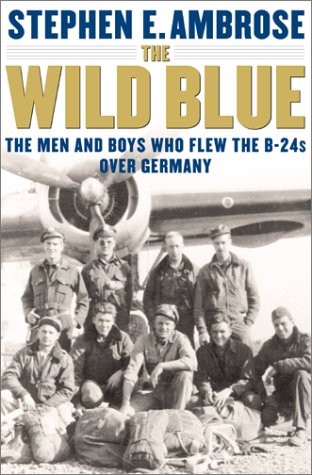
The Wild Blue: The Men and Boys Who Flew the B-24s Over Germany by Stephen E. Ambrose
Published: 2001
Rating: 3.5
Goodreads

A quick read that focused on a B-24 Liberator pilot and his crew, stationed in Italy and tasked with bombing strategic targets such Germany's oil fields.  That pilot was George McGovern, later US Senator and 1972 presidential candidate.

What I learned:

  • The B-24's took a tremendous amount of physical and emotional strength to fly.
  • Pilots needed to complete 35 missions before they could go home.
  • Many young pilots died during training and so were pre-war casualties.
  • McGovern was part of the 15th Air Force which was not as famous as the 8th Air Force stationed in England.
  • Good descriptions of formation flying, flak, faulty bomb releases.
  • Cabins were not pressurized so the crew needed oxygen and endured sub-zero temperatures during missions.
  • Fighter support was crucial to bomber's success.
  • Mussolini's Italy was decimated.


Audiobook: Flag of our Fathers by James Bradley
Published: 2000
Rating: 4
Goodreads

An engrossing book which focuses on 5 Marines and 1 Navy corpsman who were immortalized in the iconic picture of World War II - the raising of the American flag on Iwo Jima.

John Bradley, the author's father was the corpsman who, after returning from the war, became a husband, father, successful small business owner and community leader.  He did not, however, speak of his war experiences or of this photo with his family.  

After his father's death in 1994, they found a few boxes containing war memorabilia in his closet which prompted James' quest to learn more about the 6 men in the photo - before, during and after the war - which, of course, included his father.

Add "To Watch and Read" list:

  • Movie: Flag of Our Fathers directed by Clint Eastwood
  • Movie: Letters from Iwo Jima directed by Clint Eastwood
  • Flyboys: A True Story of Courage by James Bradley
  • The Imperial Cruise: The Secret History of Empire and War by James Bradley

With the Old Breed by E.B. Sledge
Published: 1981
Rating: 5
Goodreads

Excellent personal memoir about an enlisted Marine's experience in WWII, specifically the Battle of Peleliu and Okinawa.  It is an honest, gritty, unembellished portrayal of war, shouldered by the men on the front lines.  Some of the scenes are unbelievably horrific.

He is a main character in Tom Hanks/Steven Spielburg's HBO production, The Pacific.

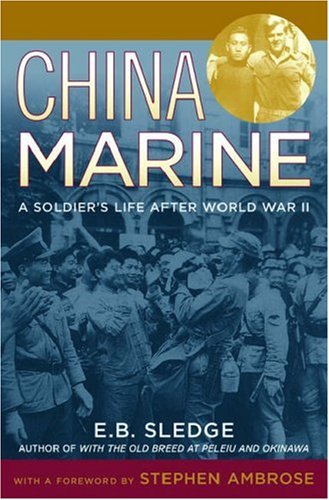
I plan to read his second book, China Marine which is a memoir about Marine life as part of the occupying forces in China.


We Band of Angels: The Untold Story of American Nurses Trapped on Bataan by the Japanese by Elizabeth Norman
Published: 1999
Rating: 5
Goodreads

The author stumbled upon references to the "Angels of Bataan and Corregidor" while researching her first book, Women at War: The Story of Fifty Military Nurses Who Served In Vietnam.  

These "angels" are the army and navy nurses who found their idyllic, island life on the Philippines turned upside-down on December, 1941 when Japanese bombs landed on Manila.  The US military under General Douglas MacArthur, woefully unprepared for enemy invasion,  retreated to the Bataan Peninsula for their first stand.  The nurses worked in two hospitals, set up in the jungle, not far from the front lines.  Before Bataan fell, the nurses were able to retreat to the Malinta Tunnel deep in Corregidor Island.

Unable to withstand the powerful Japanese forces, the army on Corregidor Island surrendered on May 6, 1942.  The POW nurses lived at the Saint Thomas Internment Camp (STIC) in Manila until liberated by MacArthur in February 1945, almost three years later.

What I learned:
  • Step-by-step fall of the Philippines to the Japanese.
  • "Europe First" policy left MacArthur to fend for himself, however with our decimated Navy at Pearl Harbor, it is unlikely the Philippines could have been saved. 
  • MacArthur's retreat to Corregidor Island earned him the bitter nickname: Dugout Doug
  • Bataan Death March
  • Nurse's grisly and harrowing work in jungle hospitals, close to the front lines of battle. 
  • Starvation, disease and death faced the nurses in STIC. 
  • The nurse's own "esprit de corps" saved them.
  • After liberation, the nurses, having lost an average of 30+ pounds were celebrities, used by the government to boost public support for the war. 
  •  Post homecoming - many felt disjointed, out-of-place, melancholic and depressed.
So glad I found this book on Amazon, in fact, it would make an inspiring movie.

Living Reed: A Novel of Korea by Pearl S. Buck
Published: 1963
Rating: 4
Goodreads

I am of Korean descent, but know very little of Korean history.  Partly because Asian history is not a focus in US schools but mostly because the subject of history, even that of my own race, was not of much interest.  That is, before reading Ken Follett's Winter of the World, a historical fiction novel about World War II.  Now, if one looked at my TBR pile, they would think I loved history.

So when I saw that Buck had written a novel about Korea, I ordered it from Amazon and read it within a couple of weeks.  Through the lens of one aristocratic family, Buck tells of Korea's tumultuous history from late 1800 - Korean War.

What I learned:
  • Political tension between Japan, China and Russia over Korea
  • Social tension between old and new religion/philosophy
  • 40+ years of brutal Japanese occupation
  • Courtship, marriage, role of women
  • Christianity in Korea
  • Teddy Roosevelt's foreign policy favored Japan over Korea
  • Communism vs democracy - a divided Korea
China Marine: An Infantryman's Life After World War II by E. B Sledge
Published: 2002
Rating: 4
Goodreads

Sledge continues his memoir of WWII, from learning about the Japanese surrender in Okinawa to being part of the occupying forces in Northern China, a "tinderbox of conflicting armed forces" to the difficult adjustment back to civilian life, typified by this scene which made it into HBO's The Pacific.

Sledge was signing up for school at Auburn University and trying to see if some of his Marine Corp training would qualify for college credit.  The girl behind the desk was getting flustered when she couldn't find course equivalency for weapons and tactics.
"Finally, in desperation, she slammed her pencil on the table and said in a loud, exasperated voice, "Didn't the Marine Corps teach you anything?!"  A gasp ran through the crowd, and you could have heard a pin drop.  I didn't lose my temper, but I realized that, like most civilians, war to this lady meant John Wayne or the sweet musical South Pacific.  
Slowly placing my hands on the table, aware that all eyes were on us, I said in a loud, calm, voice: "Lady, there was a killing war.  The Marine Corps taught me how to kill Japs and try to survive.  Now, if that don't fit into any academic course, I'm sorry.  But some of us had to do the killing - and most of my buddies got killed or wounded."  
In the preface, he writes about living with the "embedded trauma...the emotional equivalent of a sliver of steel shrapnel lodged near my heart."  I can relate to this.

A Marine's experience of the war, told in his own words, is so gripping.  I can feel him trying to express the inexpressible through the limited means of language.

Other memoirs to read:
  • Goodbye Darkness: A Memoir of the Pacific War by William Manchester
  • Red Blood, Black Sand: Fighting Alongside John Basilone from Boot Camp to Iwo Jima by Chuck Tatum
Audiobook - The Few: The American "Knights of the Air" Who Risked Everything to Fight in the Battle of Britain by Alex Kershaw
Published: 2006
Rating: 4
Goodreads

In 1940, while Britain was fighting for her life again Nazi Germany's quest to gain air superiority, it was illegal for any US citizen to fight for a foreign nation, even an ally.

Despite this policy, many American pilots joined the Royal Air Force, fought bravely alongside their aces and did their part to help save the RAF from destruction.  And with the loss of air domination, Hitler called off the invasion of England.

The reader of the audio book was very good - employing German, American, British and Australian accents when needed.  While driving in my car, I could envision the dogfights over the English countryside, her cities or the English Channel.   I could feel the pilot's intense relief in surviving another battle, along with the ensuing physical and emotional post-battle fatigue as well as the grief upon learning of a fellow pilot's death.

Other WWII books by Kershaw:
  • Escape From the Deep - about submarine U.S.S Tang
  • The Longest Winter - about the Battle of the Bulge
  • The Bedford Boys: One American Town's Ultimate D-Day Sacrifice
The Eagle Has Landed by Jack Higgins
Published: 1975
Rating: 2
Goodreads

This fictionalized account of Germany's attempt to kidnap Winston Churchill was uninteresting.  I now see that historical fiction can run the gamut on accuracy and authenticity.  I have to be more selective on what stories to read.


Tuesday, June 18, 2013

June 2013 Books


Ike: An American Hero by Michael Korda
Published: 2007
Rating: 4
Goodreads

Over the past 9 months I have been reading about WWII and the brave citizen soldiers who fought against Nazi Germany, Fascist Italy and Imperialist Japan.  This month, I wanted to learn more about the person who led the Allied forces to victory in Europe.  I also wanted to learn more about the post WWII era, (i.e. the Cold War).  Both goals were accomplished via two well-written biographies on the Supreme Commander of the Allied Forces in Europe and later, President of the United States from 1953 - 1961: Dwight D. Eisenhower.

Bullet points of interest that I jotted down in the front of the book:
  •  he had to deal with prima donna generals like Montgomery (huge jerk) and George Patton.
  •  Love triangle?  Ike, Kay Summersby and Mamie (wife)
  •  Korda makes constant comparisons to the Civil War such as Bastogne-Gettysburg and Ike-Grant.
  •  During the war, he was a huge chain smoker - up to 4 packs a day!
  • He is not buried in Arlington Cemetery, but rather in a small chapel on the grounds of the Eisenhower Presidential Library in his hometown of Abilene, Kansas.
Jobs after the war:
  • Leader of US Occupying Forces in Germany
  • Army Chief of Staff (replaced Marshall)
  • President of Columbia University
  • 1st Commander of NATO forces
  • President of the United States for 2 terms
Memoirs to add to the wish list?

By Eisenhower
  • Crusade in Europe 
  • At Ease: Stories I Tell to Friends
  • White House Years: Waging Peace, 1956-1961
By Churchill
  • 6 Volume History of World War II

Eisenhower: Soldier and President by Stephen E. Ambrose
Published: 1983
Rating: 4
Goodreads

This is the second Ambrose book I've read - the first was Band of Brothers.  I really like his writing: clear, concise and interesting.  He gives an unbiased accounting of Eisenhower's good and bad decisions as General and President.

What I learned:
  • Nixon was his VP for 8 years.  They had a formal, frosty relationship.  
  • Eisenhower ended the Korean War with an armistice.  He could not see a way to win without WWIII and a battle with the Russians.
  • He did not get sucked into other escalating areas such as Vietnam and Cuba.
  • President over 8 years of peace and prosperity.
  • He did not assert leadership during the Civil Rights Movement (I found this surprising).
  • U-2 incident (spy plane over Russia) which ended in international embarrassment. 
Other Ambrose books to read:
  • D-Day, June 6, 1944: The Climactic Battle of World War II
  • Citizen Soldiers
  • The Victors: Eisenhower and His Boys: The Men of World War II
  • Comrades: Brothers, Fathers, Heroes, Sons, Pals
  • The Wild Blue: The Men and Boys Who Flew the B-24s Over Germany

The Key to Rebecca by Ken Follett
Published: 1980
Rating: 3
Goodreads

A quick read about a ruthless German spy in Egypt feeding information to Rommel, a British spy-catcher and a beautiful Jewess.

This fictitious account reminds me of his other recently read works: Hornet Flight and Eye of Needle. 


The Odessa File by Frederick Forsyth
Published: 1972
Rating: 3
Goodreads

This book was referenced in Korda's biography on Ike, so I downloaded a sample, got hooked, bought the i-book and finished in a couple of days.

It is based on the true life account of the post-war activities of a ruthless SS officer, Otto Skorzeny, who set up "Odessa, the escape network for Nazi war criminals".


The Good Earth by Pearl S. Buck
Published: 1931
Rating: 5
Awards:  1932 Pulitzer Prize for Novel
Goodreads

I needed a break from WWII and felt hungry for good literary fiction.  I plucked this from my shelves and was hooked from the start.

The first book in her trilogy about the honest, hard-working farmer, Wang Lung and his family in pre-WWII China.  It was a best-seller in 1931 - 1932 and according to Wikipedia, the books apparently helped Americans consider the Chinese as allies in the upcoming conflict with Japan.

The second book of the trilogy, Sons was published in 1932 and the last book,  A House Divided in 1935.

Sons By Pearl S. Buck (# 2 in Good Earth trilogy)
Published: 1932
Rating: 3
Goodreads

As intimated by the title, this book focuses on the three sons of Wang Lung.  In contrast to the round characters in The Good Earth, the sons are flat and one-dimensional; therefore, not as interesting, hence the lower rating.

The social and historical context of pre-World War II China is what makes this trilogy fascinating.  The third son becomes a decorated soldier and with his inheritance, amasses an army and becomes a war lord in the north.  It is a very unstable time period as war lords constantly vie for more land, armies and power while revolution takes root and spreads in the south.

I know nothing of modern Chinese history so will probably read the third book in the trilogy to find out what happens to this family and their country.   I am already starting a list of books to read in the future:

  • Thunder Out of China by Theodore White
  • The Last Empress: Madame Chiang Kai-Shek and Birth of Modern China by Hannah Pakula
  • China Marine: An Infantryman's Life After World War II by E.B. Sledge

Audiobook: Unbroken: A World War II Story of Survival, Resilience and Redemption by Laura Hillenbrand
Published: 2010
Rating: 5
Goodreads
Author web site

WOW - what an awesome, inspiring story of Louis Zamperini, Olympic athlete (1936) turned US Army Air Force bombardier in WWII.

I did not know anything of this man's life before listening to the audiobook which made it that much more enjoyable.  His story needed to be told and I am glad Hillenbrand stumbled upon it while conducting research for her first book, Seabiscuit. 

What he endured during the war is truly mind-boggling, defies comprehension and elicited many verbal outbursts (OMG, no way, you've got to be kidding me, what? really?), complete with head shaking and slapping of the steering wheel while driving alone in my car.  Anyone viewing must've thought I was a bit loco.

I love Hillenbrand's writing - so clear, concise, strong and vivid.  One would never know she suffers terribly from chronic fatigue syndrome and is therefore completely housebound, living vicariously through her research and writing - read interview.

I've seen the movie Seabiscuit and loved it, but now want to read her book.  I am a big fan and can only hope that she finds another interesting subject worthy of her writing.


Helmet For My Pillow: From Parris Island to the Pacific by Robert Leckie
Published: 1957
Rating: 5
Goodreads

Another WOW book about a budding, 21-year old journalist Robert Leckie, who enlisted in the US Marine Corp in January 1942 and fought at Guadalcanal, Cape Gloucester and Peleliu where he was wounded by a blast concussion and evacuated to a field hospital.   He is one of the main characters in the Hanks/Spielburg HBO mini series, The Pacific.

He decided to write this memoir in 1951 after seeing the Broadway musical, South Pacific, in order to "tell the story of how it really was.  I have to let people know the war wasn't a musical." (wikipedia article).  He accomplished his goal.

A beautifully written literary memoir about how one goes from being a young patriotic man-boy to a well-trained killer/soldier, ready to fight a ferocious and brutal Japanese enemy - for his country, yes, but even more so, for his fellow Marines - esprit de corps.

Some of my favorite passages:
A soldier's pack is like a woman's purse: it is filled with his personality. 
And there is terror, coming from the interaction of trial and tedium: the first, shaking a man as the wind in the treetops; the second, eroding him as the flood at the roots.  Each fresh trial leaves a man more shaken than the last, and each period of tedium - with its time for speculative dread - leaves his foundations worn lower, his roots less firm for the next trial.
Upon seeing a detached hand:
I turned to go, and as I did, nearly stepped on someone's hand.  "Excuse me," I began to say, but then I saw that it was an unattached hand, or rather a detached one.  It lay there alone - open, palm upwards, clean, capable, solitary.  I could not tear my eyes from it.  The hand is the artisan of the soul.  It is the second member of the human trinity of head and hand and heart.  A man has no faculty more human than his hand, none more beautiful nor expressive nor productive.  To see this hand lying alone, as though contemptuously cast aside, no longer a part of a man, no longer his help, was to see way in all it wantonness; it was to see the especially brutal savagery of our own technique of rending, and it was to see men at their eternal worst, turning upon one another, tearing one another, clawing at their own innards with the maniacal fury of the pride-possessed. 
His descriptions of living and waging war in the jungle are unforgettable.

After publishing his memoir, he went on to be a prolific writer of military history.   The following are ones that I would like to read:

  • Strong Men Armed: The U.S. Marines Against Japan (1962)
  • Conflict: The History of the Korean War (1963)
  • Challenge for the Pacific: 6 Month Battle of Guadalcanal (1968)
  • Delivered From Evil: The Saga of WWII (1987)
  • The March to Glory: Battle of Chosin Reservoir (1990)
  • Okinawa: The Last Battle of WWII (1995)
  • Wars of America (1998)