
Published: 1994
Rating: 5
1995 Pulitzer Prize for History
Goodreads
This is the first of several biographies I plan to read on Washington's first power couple. For a novice such as myself, Goodwin's book is an excellent start. Beginning with the day that ended Europe's "Phony War", when Roosevelt learned of Hitler's invasion of Holland, Luxembourg and the Netherlands on May 9, 1940, Goodwin unveils the personal and political life of this unusual couple as they navigate the war of the century.
What I learned: about FDR:
- Privledged life
- Very close to his mother, Sara
- Master politician - manipulator
- Unfaithful husband
- Paralyzed by polio at 39 years old
- Kept his own counsel - "ice in his veins"
- Could see the whole picture
- Would not move without public opinion
- Folksy fireside chats
- Elected to an unprecedented four terms
About Eleanor Roosevelt:
- Shy, awkward, unattractive daughter of beautiful, aloof mother
- Alcoholic father
- Niece of Theodore Roosevelt
- Had 6 children (one died in infancy) but left rearing to her mother-in-law
- Became FDR's eyes and ears after he was disabled by polio
- After finding out about FDR's affair with Lucy Mercer, she no longer lived as his wife but continued as political partner.
- Struggled with depression
- Work-a-holic
- Championed the underdog: children, women, Negros, laborers
- A die-hard liberal
FDR's smart decisions:
- Picked military leaders and let them run the war
- 1940 - 1942 - Lend Lease policy which allowed US to give aid to Britain and Russia without entering the war.
- Doolittle raid on Tokyo
- Decision to invade North Africa first
- Recapture of the Philippines
- Production of B-29 Superfortress bomber
- Spent enormous amount of federal money on research/development of atomic bomb
- United Nations
FDR misses:
- Did not push mobilization/production in 1940-1941
- Did not do enough to protect small business
- Sanctioned relocation of US citizens of Japanese descent.
- Holocaust -he felt the best way to relieve the suffering of the Jews in concentration camps was to end the war as quickly as possible. He could've done much more.
Unprecedented social change in America:
- Great Migration: south to north, east to west and rural to city
- Greatest redistribution of wealth - created the middle class
- Post war economic boom
- GI bill
- Mixed economy: government and consumer spending
- New entrants into the workforce: women and Negroes

Published: 1998
Rating: 3
Goodreads
I have mixed feelings about this book. No doubt - the young men and women who grew up in the Great Depression, then fought the two-front war at home and overseas, and upon returning, contributed to the greatest economic boom of this country - deserve to be called "The Greatest Generation" and the more I learn about their sacrifice, the more indebted I feel.
However, Brokaw's book gives a one-sided view of those who came home, focusing on the ones who could put the war behind them and lead well-adjusted, productive lives.
I look forward to reading Thomas Childer's book, Soldier From the War Returning: The Greatest Generation's Troubled Homecoming From WWII, which will give a more realistic portrait of the emotional, psychological and physical challenges that faced veterans upon their return.
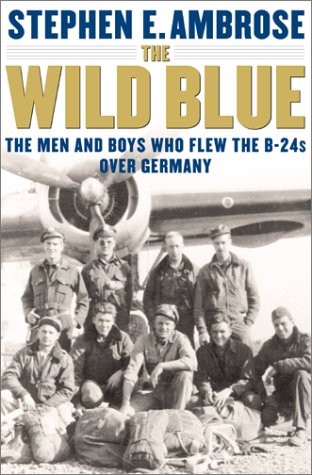
Published: 2001
Rating: 3.5
Goodreads
A quick read that focused on a B-24 Liberator pilot and his crew, stationed in Italy and tasked with bombing strategic targets such Germany's oil fields. That pilot was George McGovern, later US Senator and 1972 presidential candidate.
What I learned:
- The B-24's took a tremendous amount of physical and emotional strength to fly.
- Pilots needed to complete 35 missions before they could go home.
- Many young pilots died during training and so were pre-war casualties.
- McGovern was part of the 15th Air Force which was not as famous as the 8th Air Force stationed in England.
- Good descriptions of formation flying, flak, faulty bomb releases.
- Cabins were not pressurized so the crew needed oxygen and endured sub-zero temperatures during missions.
- Fighter support was crucial to bomber's success.
- Mussolini's Italy was decimated.

Published: 2000
Rating: 4
Goodreads
An engrossing book which focuses on 5 Marines and 1 Navy corpsman who were immortalized in the iconic picture of World War II - the raising of the American flag on Iwo Jima.
John Bradley, the author's father was the corpsman who, after returning from the war, became a husband, father, successful small business owner and community leader. He did not, however, speak of his war experiences or of this photo with his family.
After his father's death in 1994, they found a few boxes containing war memorabilia in his closet which prompted James' quest to learn more about the 6 men in the photo - before, during and after the war - which, of course, included his father.
Add "To Watch and Read" list:
- Movie: Flag of Our Fathers directed by Clint Eastwood
- Movie: Letters from Iwo Jima directed by Clint Eastwood
- Flyboys: A True Story of Courage by James Bradley
- The Imperial Cruise: The Secret History of Empire and War by James Bradley

Published: 1981
Rating: 5
Goodreads
Excellent personal memoir about an enlisted Marine's experience in WWII, specifically the Battle of Peleliu and Okinawa. It is an honest, gritty, unembellished portrayal of war, shouldered by the men on the front lines. Some of the scenes are unbelievably horrific.
He is a main character in Tom Hanks/Steven Spielburg's HBO production, The Pacific.
I plan to read his second book, China Marine which is a memoir about Marine life as part of the occupying forces in China.

We Band of Angels: The Untold Story of American Nurses Trapped on Bataan by the Japanese by Elizabeth Norman
Published: 1999
Rating: 5
Goodreads
The author stumbled upon references to the "Angels of Bataan and Corregidor" while researching her first book, Women at War: The Story of Fifty Military Nurses Who Served In Vietnam.
These "angels" are the army and navy nurses who found their idyllic, island life on the Philippines turned upside-down on December, 1941 when Japanese bombs landed on Manila. The US military under General Douglas MacArthur, woefully unprepared for enemy invasion, retreated to the Bataan Peninsula for their first stand. The nurses worked in two hospitals, set up in the jungle, not far from the front lines. Before Bataan fell, the nurses were able to retreat to the Malinta Tunnel deep in Corregidor Island.
Unable to withstand the powerful Japanese forces, the army on Corregidor Island surrendered on May 6, 1942. The POW nurses lived at the Saint Thomas Internment Camp (STIC) in Manila until liberated by MacArthur in February 1945, almost three years later.
What I learned:
- Step-by-step fall of the Philippines to the Japanese.
- "Europe First" policy left MacArthur to fend for himself, however with our decimated Navy at Pearl Harbor, it is unlikely the Philippines could have been saved.
- MacArthur's retreat to Corregidor Island earned him the bitter nickname: Dugout Doug
- Bataan Death March
- Nurse's grisly and harrowing work in jungle hospitals, close to the front lines of battle.
- Starvation, disease and death faced the nurses in STIC.
- The nurse's own "esprit de corps" saved them.
- After liberation, the nurses, having lost an average of 30+ pounds were celebrities, used by the government to boost public support for the war.
- Post homecoming - many felt disjointed, out-of-place, melancholic and depressed.
So glad I found this book on Amazon, in fact, it would make an inspiring movie.
 Living Reed: A Novel of Korea by Pearl S. Buck
Published: 1963
Rating: 4
Goodreads
I am of Korean descent, but know very little of Korean history. Partly because Asian history is not a focus in US schools but mostly because the subject of history, even that of my own race, was not of much interest. That is, before reading Ken Follett's Winter of the World, a historical fiction novel about World War II. Now, if one looked at my TBR pile, they would think I loved history.
So when I saw that Buck had written a novel about Korea, I ordered it from Amazon and read it within a couple of weeks. Through the lens of one aristocratic family, Buck tells of Korea's tumultuous history from late 1800 - Korean War.
What I learned:
 China Marine: An Infantryman's Life After World War II by E. B Sledge
Published: 2002
Rating: 4
Goodreads
Sledge continues his memoir of WWII, from learning about the Japanese surrender in Okinawa to being part of the occupying forces in Northern China, a "tinderbox of conflicting armed forces" to the difficult adjustment back to civilian life, typified by this scene which made it into HBO's The Pacific.
Sledge was signing up for school at Auburn University and trying to see if some of his Marine Corp training would qualify for college credit. The girl behind the desk was getting flustered when she couldn't find course equivalency for weapons and tactics.
A Marine's experience of the war, told in his own words, is so gripping. I can feel him trying to express the inexpressible through the limited means of language.
Other memoirs to read:
 Audiobook - The Few: The American "Knights of the Air" Who Risked Everything to Fight in the Battle of Britain by Alex Kershaw
Published: 2006
Rating: 4
Goodreads
In 1940, while Britain was fighting for her life again Nazi Germany's quest to gain air superiority, it was illegal for any US citizen to fight for a foreign nation, even an ally.
Despite this policy, many American pilots joined the Royal Air Force, fought bravely alongside their aces and did their part to help save the RAF from destruction. And with the loss of air domination, Hitler called off the invasion of England.
The reader of the audio book was very good - employing German, American, British and Australian accents when needed. While driving in my car, I could envision the dogfights over the English countryside, her cities or the English Channel. I could feel the pilot's intense relief in surviving another battle, along with the ensuing physical and emotional post-battle fatigue as well as the grief upon learning of a fellow pilot's death.
Other WWII books by Kershaw:
 The Eagle Has Landed by Jack Higgins
Published: 1975
Rating: 2
Goodreads
This fictionalized account of Germany's attempt to kidnap Winston Churchill was uninteresting. I now see that historical fiction can run the gamut on accuracy and authenticity. I have to be more selective on what stories to read.

Published: 1963
Rating: 4
Goodreads
I am of Korean descent, but know very little of Korean history. Partly because Asian history is not a focus in US schools but mostly because the subject of history, even that of my own race, was not of much interest. That is, before reading Ken Follett's Winter of the World, a historical fiction novel about World War II. Now, if one looked at my TBR pile, they would think I loved history.
So when I saw that Buck had written a novel about Korea, I ordered it from Amazon and read it within a couple of weeks. Through the lens of one aristocratic family, Buck tells of Korea's tumultuous history from late 1800 - Korean War.
What I learned:
- Political tension between Japan, China and Russia over Korea
- Social tension between old and new religion/philosophy
- 40+ years of brutal Japanese occupation
- Courtship, marriage, role of women
- Christianity in Korea
- Teddy Roosevelt's foreign policy favored Japan over Korea
- Communism vs democracy - a divided Korea
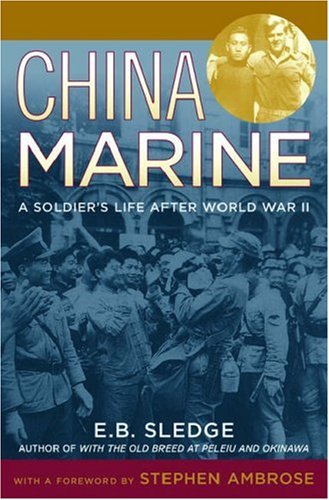
Published: 2002
Rating: 4
Goodreads
Sledge continues his memoir of WWII, from learning about the Japanese surrender in Okinawa to being part of the occupying forces in Northern China, a "tinderbox of conflicting armed forces" to the difficult adjustment back to civilian life, typified by this scene which made it into HBO's The Pacific.
Sledge was signing up for school at Auburn University and trying to see if some of his Marine Corp training would qualify for college credit. The girl behind the desk was getting flustered when she couldn't find course equivalency for weapons and tactics.
"Finally, in desperation, she slammed her pencil on the table and said in a loud, exasperated voice, "Didn't the Marine Corps teach you anything?!" A gasp ran through the crowd, and you could have heard a pin drop. I didn't lose my temper, but I realized that, like most civilians, war to this lady meant John Wayne or the sweet musical South Pacific.
Slowly placing my hands on the table, aware that all eyes were on us, I said in a loud, calm, voice: "Lady, there was a killing war. The Marine Corps taught me how to kill Japs and try to survive. Now, if that don't fit into any academic course, I'm sorry. But some of us had to do the killing - and most of my buddies got killed or wounded."In the preface, he writes about living with the "embedded trauma...the emotional equivalent of a sliver of steel shrapnel lodged near my heart." I can relate to this.
A Marine's experience of the war, told in his own words, is so gripping. I can feel him trying to express the inexpressible through the limited means of language.
Other memoirs to read:
- Goodbye Darkness: A Memoir of the Pacific War by William Manchester
- Red Blood, Black Sand: Fighting Alongside John Basilone from Boot Camp to Iwo Jima by Chuck Tatum

Published: 2006
Rating: 4
Goodreads
In 1940, while Britain was fighting for her life again Nazi Germany's quest to gain air superiority, it was illegal for any US citizen to fight for a foreign nation, even an ally.
Despite this policy, many American pilots joined the Royal Air Force, fought bravely alongside their aces and did their part to help save the RAF from destruction. And with the loss of air domination, Hitler called off the invasion of England.
The reader of the audio book was very good - employing German, American, British and Australian accents when needed. While driving in my car, I could envision the dogfights over the English countryside, her cities or the English Channel. I could feel the pilot's intense relief in surviving another battle, along with the ensuing physical and emotional post-battle fatigue as well as the grief upon learning of a fellow pilot's death.
Other WWII books by Kershaw:
- Escape From the Deep - about submarine U.S.S Tang
- The Longest Winter - about the Battle of the Bulge
- The Bedford Boys: One American Town's Ultimate D-Day Sacrifice

Published: 1975
Rating: 2
Goodreads
This fictionalized account of Germany's attempt to kidnap Winston Churchill was uninteresting. I now see that historical fiction can run the gamut on accuracy and authenticity. I have to be more selective on what stories to read.


