Friday, July 27, 2012

A Moveable Feast by Ernest Hemingway

A Moveable Feast by Ernest Hemingway
Published: 1964
Rating: 4
Goodreads

Hemingway has been on my list of "to read" authors for a long time.  I've always looked for this book during library sales or at used bookstores with no luck.  So when it was on a carousel titled "Living in Paris" at my local library, I snatched it up.  It is a quick and interesting read about a literary expat's life in Paris after WWI.

It was during this time that Hemingway made friends with Gertrude Stein, Ezra Pound, F. Scott Fitzgerald and Ford Maddox Ford and spent time with James Joyce; all of whom are within the pages of A Moveable Feast. 

This quote from Hemingway to a friend in 1950 is on the title page:
If you are lucky enough to have lived in Paris as a young man, wherever you go for the rest of your life, it stays with you, for Paris is a moveable feast.
I like Hemingway's clear, concise, sometimes terse, sometimes elongated writing style.  Some of my favorite quotes:

His description upon meeting a nasty acquaintance of Ezra Pound.  In particular, what he says about the  eyes is crazy good.
He had a face that minded me of a frog, not a bullfrog but just any frog, and Paris was too big a puddle for him....Some people show evil as a great race horse shows breeding.....I tried to break his face down and describe it but I could only get the eyes.  Under the black hat, when I had first seen them, the eyes had been those of an unsuccessful rapist.    
On writing:
All you have to do is write one true sentence.  Write the truest sentence you know.  
Up in that room I decided that I would write one story about each thing that I knew about.  I was trying to do this all the time I was writing, and it was good and severe discipline.  
He learned "never to empty the well of my writing, but always to stop when there was still something there in the deep part of the well, and let it refill at night from the springs that fed it."
On the chapter title page called "Scott Fitzgerald":
His talent was as natural as the pattern that was made by the dust on a butterfly's wings.  At one time he understood it no more than the butterfly did and he did not know when it was brushed or marred. Later he became conscious of his damaged wings and of their construction and he learned to think and could not fly any more because the love of flight was gone and he could only remember when it has been effortless. 
I have the following books on my wish list:

  • The Sun Also Rises (1926)
  • Man Without Women (1927)
  • A Farewell to Arms (1929) - about the Italian front
  • Death in the Afternoon (1932) - about bullfighting
  • Green Hills of Africa (1935) - about hunting big game in Africa
  • For Whom the Bell Tolls (1940) - Spanish Civil War
  • The Old Man and the Sea (1952) - Pulitzer Prize Winner in 1953
Hemingway won the Nobel Prize for Literature in 1954 "for his powerful, style-forming mastery of the art of narration."  

Tragically, he died by suicide in 1961. 


Saturday, July 7, 2012

June 2012 Books

June has started a fascinating journey into the world of published diaries; a close cousin to the memoir, which has been a very important genre on my grief journey.  I expect diaries will be as well since the bibliographies of the books below have significantly added to my wish list and TBR pile.


Revelations - Diaries of Women edited by Mary Jane Moffat and Charlotte Painter
Published: 1974
Rating: 4
Goodreads

I ordered this book from Amazon after reading this post on A Work in Progress.  Revelations contains excerpts from 32 female diarists.  Some are well known such as Virginia Woolf,  Anne Frank and Anais Nin.  Many others were not, at least to me.  It was interesting to read thoughts from the wives/sisters of famous authors: Tolstoy, Dostoevsky, William Wordsworth and Henry James.

I have become an avid diarist since my beloved son's death and it has literally saved me.  The blank pages of my journals have taken raw and uncensored thoughts, feelings and emotions day or night, without complaint or comment.  Many of my posts on his blog have their genesis in my journal.

Here are my favorite quotes:

"When I am excited or sad nothing soothes me like my diary.  If I am very happy my joy calms down, subsides whilst I write.  My diary has become indispensable to me."  Nelly Ptaschkina, Feb 23, 1918 (15 years old).

"I shall at least have my own way and it may bring relief as an outlet to that geyser of emotions, sensations, speculations and reflections which ferments perpetually within my poor carcass for its sins; so here goes, my first Journal!"  Alice James, May 31, 1889 (41 years old).

"I want to write, but more than that, I want to bring out all kinds of things that lie buried deep in my heart."  Anne Frank

"I had to find one place of truth, one dialogue without falsity.  This is the role of the diary." Anais Nin

After reading this book, I have added a number of books to my wish list.

First batch of books ordered from Amazon on 6/11/12:
  • The Selected Journals of L. M. Montgomery, Vol 1, 1889 - 1910 because I loved the Anne of Green Gable series
  • A Brief History of Diaries: From Pepys to Blogs by Alexandra Johnson
  • Leaving a Trace: On Keeping A Journal by Alexandra Johnson
  • The Hidden Writer: Diaries and the Creative Life by Alexandra Johnson
  • Writers and Their Notebooks by Diana Raab
  • The Writer's Portable Mentor: A Guide to Art, Craft and the Writing Life by Priscilla Long
  • Introspections: American Poets on One of Their Own Poems edited by Robert Pack and Jay Parini
The Song of Achilles by Madeline Miller
Published: 2011
Rating: 5
Winner of 2012 Orange Prize for Fiction
Author's web site

I was recently re-reading the section of The Iliad where Homer's describes Achilles' despair upon hearing of Patroklos' death, and his subsequent merciless and blood-thirsty revenge upon the Trojans and Hektor in particular.  Once again, as at the time of the initial reading, I wished that Homer told us why Achilles behaved in such an extreme manner.  After all, they were in a war and Patroklos went out to battle in Achilles' armor...surely he knew that Patroklos could die.

Then I remembered reading a favorable Washington Post review of The Song of Achilles that made me think at the time, I should read this.  Maybe it will shed some light on Achilles' profound grief.

I downloaded a sample on my iPad and was hooked.  A couple clicks later, I bought the e-book and couldn't put it down.  It definitely helped that I was familiar with The Iliad.  I loved seeing familiar characters such as the wily and manipulative Odysseus in the scene where he tricks Achilles into revealing himself.

Miller's book charts the evolution of Achilles' and Patroklos' relationship from boyhood friends to soul mates and lovers. And how Achilles' love was "all in" - he loved Patroklos with all his heart, soul, mind and body.  So much so, there was no room for anyone else.

So Achilles' grief at the death of his one true love made perfect sense for it reflects the truism that I have experienced:  Grief is proportionate to love.  In other words: extreme love means extreme grief.  See post on Josh's blog.

Miller's writing is so descriptive.  Told from the point of view of Patroklos, I could see, hear, feel, smell and taste everything that he did - see quotes below.
I had not realized how intimate supplication was, how closely we would be pressed. His ribs were sharp beneath my cheek; the skin of his legs was soft and thin with age. 
Achilles returns to the tent, where my body waits. He is red and red and rust-red, up to his elbows, his knees, his neck, as if he has swum in the vast dark chambers of a heart and emerged, just now, still dripping.
Leaving A Trace: On Keeping A Journal by Alexandra Johnson
Published: 2001
Rating: 4
Goodreads

In this small, compact book, Johnson strives to answer two questions: how to keep a journal and what can be done with all the material within them.

She encourages newbies to have the goal of writing a couple of times a week, varying where and when one writes.  She provides a number of exercises and prompts to help jump-start any diarist with the reminder that "journals allow one to reflect, to step outside oneself.  They create a third space, an invaluable pause between the conscious and unconscious self."  She believes that a journal is "how memory and meaning finally meet" to give the writer a perspective on his/her life.

It is important to be honest and truthful in the journal.  For Joyce Carol Oates, the "journal is the ideal place of refuge for the inner self because it constitutes a counterworld: a world to balance the other."  Elizabeth Berg says "it's very important that no one read my journal but me.  You need a mirror where you can stick your stomach out all the way."  Joan Didion writes "entirely to find out what I'm thinking, what I'm looking at, what I see and what it means."

Johnson shares how some diarists have come up with creative ways to index their journals in order to find material quickly.  For example, a retired lawyer's index was critical to the writing a memoir of his WWII experiences.

The second half of the book focuses on how to take the raw material in journals and revise them into a creative work - be it a sketch, personal essay or memoir.   She defines "creative nonfiction" as the genre in which the writer will use "the facts of a life, the techniques of fiction, and the resonant imagery of poetry" to "move from notes to narrative, from private to public voice."

I have added more books to my wish list.  Ones that I am very interested in purchasing right away are:
  • An Interrupted Life by Etty Hillesum
  • The Art of the Personal Essay by Philip Lopate
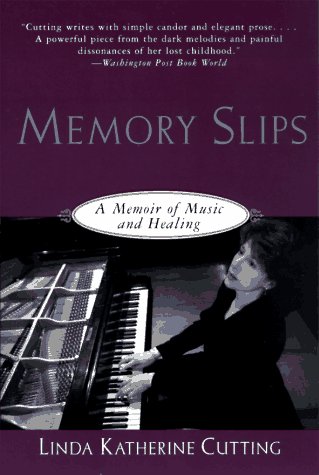
  • Memory Slips by Linda Cutting
Writers and Their Notebooks edited by Diana Raab
Published: 2010
Rating: 4
Goodreads
Author's web site

A easy-to-read collection of essays by writers who "use their notebooks to inspire, record, and document anything and everything which may nurture or spark their creative energy."

Two quotes from Ilan Stavan's "Using My Notebook" have gone into my journal: "Truth is what literature is about: the conviction that through words, not just any words but the right words, and whatever else accompanies them, I might reach the essence of things" and "I don't intend for my notebooks ever to be published.  I feel naked in them - comfortably naked, yes, but naked nonetheless."

Zan Bockes uses her journal to assist in the ongoing battle with her bipolar disorder.  "My journal remains my closest and most consistent companion....it has seen me through tumultuous times, enhance my honesty with myself and my understanding of pain.  Basically, I survive to write because I write to survive."

I related the most to Kathleen Gerard's essay called "Clearing the Decks".  At fourteen, she began writing in a journal to cope with her father's sudden death. "My journal became a safe place where my voice and my feelings could finally be heard, and my perceptions counted....it transforms into a combination of trusted friend, therapist, and spiritual advisor....my journal becomes a form of written meditation - where I let go of all inhibition until what's important is sifted from what is not.  In essence, I purge some of the emotional clutter piling up inside of me until I finally clear the decks enough to illuminate my soul."

I like how Rebecca McClanahan compares her journal to a confessional booth that "never yawns...it just listens...it will never betray our confidence....the journal is our punching bag, our padded cell.  It absorbs the blows.   Sometimes we confess. We enter the booth, and the journal lifts the partition.  No matter if it's been three weeks since our last confession, or three years. the journal welcomes us home."

Eventually, I might like to read the published journals of the following writers:

  • Louisa May Alcott
  • John Cheever
  • Emerson and Thoreau
  • John Fowles
  • Andre Gide
  • Joyce Carol Oates
  • Sylvia Plath
  • Ayn Rand
  • George Sand
  • May Sarton
  • Sei Shonagon
  • Virginia Woolf
The memoir I want to purchase now is Los Angeles Diaries by James Brown.

A Brief History of Diaries: From Pepys to Blogs by Alexandra Johnson
Published: 2010
Rating: 3
Goodreads

I was hoping for more in this short book, especially about blogs.  Having read her other two books this month, I could've given this one a pass.


The Hidden Writer: Diaries and the Creative Life by Alexandra Johnson
Published: 2010
Rating: 4
Goodreads

Johnson offers seven well-written sketches that delve deeper into the lives, motives, practices and impact of the following diarists:

  • Child prodigy Marjory Fleming's diary written inspired Mark Twain and Robert Louis Stevenson. 
  •  Sonya and Leo Tolstoy who read each other's diaries - a practice that did not bode well for a happy union.
  • Alice James - sickly and frail sister of famous novelist Henry James
  • Katherine Mansfield and Virginia Woolf - two friends and rivals; so different and yet so similar
  • Anais Nin - one of the most famous diarist of all time
  • May Sarton - most known for Journal of Solitude which was written later in life and explored such themes as solitude, aging and illness. 
Favorite quotes: 

"The false persona I had created for the enjoyment of my friends, the gaiety, the buoyant, the receptive, the healing person, always on call, always ready with sympathy, had to have its other existence elsewhere.  In the diary I would reestablish the balance....I could let out my demons" (Anais Nin).

"Pain is the great teacher.  I woke before dawn with this thought.  Joy, happiness, are what we take and do not question.  They are beyond question, maybe.  A matter of being.  But pain forces us to think, and to make connections, to sort out what is what, to discover what has been happening to cause it.  And, curiously enough, pain draws us to other human beings in a significant way, whereas joy or happiness to some extent, isolates" (May Sarton).

"The writer, at his desk alone, must create his own momentum, draw enthusiasm up out of his own substance, not just once, when he may feel inspired, but day after day when he does not" (May Sarton).

Second batch of books ordered from Amazon on 6/20/2012:

  • A Book of One's Own by Thomas Mallon
  • The Assassin's Cloak: An Anthology of the World's Greatest Diarist edited by Alan and Irene Taylor
  • The Art of the Personal Essay: An Anthology from the Classical Era to the Present  edited by Phillip Lopate
  • Touchstones: American Poets on a Favorite Poem edited by Robert Pack and Jay Parini
  • The Los Angeles Diaries: A Memoir by James Brown
  • The Golden Notebook by Doris Lessing
  • Rose, Where Did You Get That Red?: Teaching Great Poetry to Children by Kenneth Koch
  • Memory Slips: A Memoir of Music and Healing by Linda K Cutting
Oroonoko by Aphra Behn
Published: 1688
Rating: 5
Goodreads

For a woman in the stifling and sexist 17th century England, Aphra Behn lived a colorful life: she traveled in the West Indies, married a Dutch merchant and was widowed soon after, worked as a spy in Antwerp for Charles II, spent time in debtor's prison and became the first English woman who wrote poetry, novels and plays for a living.

In her famous extended essay, A Room of One's Own, Virginia Woolf gives props to Behn saying, " All women together ought to let flowers fall upon the tomb of Aphra Behn which is, most scandalously but rather appropriately, in Westminster Abbey, for it was she who earned them the right to speak their minds."

I loved this novella, but be warned;  it is a tragedy amongst all tragedies.  Surprising accessible - once you get used to the longer-than-normal paragraph length and randomly capitalized words within the sentence - the story moves at break neck speed.  I was about one-third of the way through when, on a sleepless night, I got up at 4am to read thinking that it would make me sleepy.  Fat chance - once I got back into the story, I couldn't put it down, nor could I stop thinking about the horrifically tragic ending.


A Book of One's Own: People and Their Diaries by Thomas Mallon
Published: 1987
Rating: 4
Goodreads

Mallon divides diarists into the following categories and offers many examples and snippets within each - complete with his own witty and sarcastic commentary.  His goal was to "offer a brief tour of some of the books that have excited or annoyed or perplexed me most; to suggest the huge varieties of diaries that get written; to consider why they're kept; and - most of all - to think about the people who keep them."  I would say "mission accomplished."
  • Chroniclers - Samuel Pepys, Virginia Woolf
  • Travelers - Lewis & Clark
  • Pilgrims - Thoreau, May Sarton, Anais Nin, C.S. Lewis
  • Creators - James Joyce, Sylvia Plath, V. Woolf, Edgar Degas, Charles Darwin, Leonardo Da Vinci and numerous others
  • Apologists - numerous politicians
  • Confessors - sites examples of adolescent diaries
  • Prisoners - Anne Frank, Albert Speer (Hitler's architect), Alice James
Favorite quotes in the preface:
"....diary writing is the poor man's art."
"...diaries are the flesh made word."
The Writer's Portable Mentor: A Guide to Art, Craft, and the Writing Life by Priscilla Long
Published: 2010
Rating: 5
Goodreads
Author's web site

I stumbled upon this book while on Amazon, and took at closer look after noticing reviewers had given it a full 5-stars.  All said it was a "must have" for both novice (me) and experienced writers; I would agree.

Long is a big believer in learning to write from other great writers, quoting Robert Louis Stevenson: "I have played the sedulous ape to Hazlitt, to Lamb, to Wordsworth, to Sir Thomas Browne, to Defoe, to Baudelaire, and to Obermann.....That, like it or not, is the way to learn to write."   And her own words: "...our core strategy, our quintessential tool, is to learn craft from models of virtuoso writing....Our best teachers are the masterworks we scrutinize."

Not surprisingly, her book is peppered with quotes; one of which was found in the chapter "The Simple Sentence", which stopped me in my tracks, became a journal writing prompt and a blog post

At her suggestion, I bought a small lined notebook which is now my Lexicon; the place to collect words and phrases.  And not just any word, but only the "good words, the juicy words, the hot words."   Since starting, I am paying far more attention to words while reading and am amazed at how many "juicy" words exist - like evanescent, repose, eschew, commodious, fecund and proclivity - to name just a few.   The following phrases have made it into my Lexicon: "...the color of a dried moth's wing...the jagged line of my salt-stained boots....cigarette-leg capris....his eyes are like shutters clicking on..."  Who knew it could be so much fun being a word/phrase collector?

Mansfield Park by Jane Austen
Published: 1814
Rating: 5

Having started and stopped this book twice - for no particular reason except that it was hard to find the 2 hours of undistracted reading time needed to get a handle on the characters and plot of this more serious, expansive Austen work - more drastic measures were needed. Therefore, on a recent business trip to Charlotte, NC from my home in Northern Virginia, it was the only book I took on the plane.

I loved it.   So many themes are explored:  the relationship between marriage and money, of which Austen is unparalleled; class and education; character and morality; the role and importance of the clergy; sibling love and rivalry; and the clash between the new secular-based, libertine views versus the more traditional, devout and conservative way of life.

The protagonist and heroine, Fanny Price, reminded me of Pamela in Samuel Richardson's novel, Pamela or Virtue Rewarded as both were virtuous young women of no means to speak of, being pursued by amoral men.  Apparently Richardson was one of her favorite authors.

Thanks to Priscilla Long's book, The Writer's Portable Mentor, I am on the look-out for superb, hard-working sentences where each word has a purpose.   I found many such sentences in Mansfield Park which is another testament to Jane Austen's masterful writing.   Some examples are below:

I love this description of the 10-year old Fanny:
She was small of her age, with no glow of complexion, nor any other striking beauty; exceedingly timid and shy, and shrinking from notice; but her air, though awkward, was not vulgar, her voice was sweet, and when she spoke, her countenance was pretty.
And of the ego-centric, lazy Mrs. Bertram:
To the education of her daughters, Lady Bertram paid not the smallest attention.  She had not time for such cares.  She was a woman who spent her days in sitting nicely dressed on a sofa, doing some long piece of needle-work, of little use and no beauty, thinking more of her pug than her children, but very indulgent to the latter, when it did not put herself to inconvenience, guided in everything important by Sir Thomas, and in smaller concerns by her sister. 
Fanny had a "room of one's own" in Mansfield Park and in writing about how she spends her time there, Austen gives the reader a glimpse into Fanny's generous and forgiving heart:
She could go there after any thing unpleasant below, and find immediate consolation in some pursuit, or some train of thought at hand. - Her plants, her books - of which she had been a collector, from the first hour of her commanding a shilling - her writing desk, and her works of charity and ingenuity, were all within her reach; - or if indisposed for employment, if nothing but musing would do, she could scarcely see an object in that room which had not an interesting remembrance connected with it. - Everything was a friend, or bore her thoughts to a friend; and though there had been sometimes much of suffering to her - though her motives had been often misunderstood, her feelings disregarded, and her comprehension under-valued; though she had known the pains of tyranny, of ridicule, and neglect, yet almost every recurrence of either had led to something consolatory; her aunt Bertram had spoken for her, or Miss Lee had been encouraging, or what was yet more frequent or more dear - Edmund had been her champion and her friend, - he had supported her cause, or explained her meaning, he had told her not to cry, or had given her some proof of affection which make her tears delightful - and the whole was now so blended together, so harmonized by distance, that every former affliction had its charm.
I have one more Austen novel to read - Northanger Abbey.  I wonder where it will fit in my ranking below:
  1. Pride and Prejudice tied with Persuasion
  2. Sense and Sensibility tied with Mansfield Park
  3. Emma
Memory Slips: A Memoir of Music and Healing by Linda Cutting
Published: 1997
Rating: 4
Goodreads

A moving and courageous memoir of a talented concert pianist who, after the suicide death of a second sibling, must face her own memories of unspeakable abuse throughout her childhood.   Struggling with suicidal ideation, she has these words by her desk: "Stay alive so you can tell."  They were told to her by a psychiatrist who was a Holocaust survivor and talked to her about "the importance of bearing witness, especially in the face of my brother's deaths....At times, those words have provided the courage to keep on living and writing."

Saturday, June 30, 2012

Mansfield Park by Jane Austen

Mansfield Park by Jane Austen
Published: 1814
Rating: 5

Having started and stopped this book twice - for no particular reason except that it was hard to find the 2 hours of undistracted reading time needed to get a handle on the characters and plot of this more serious, expansive Austen work - more drastic measures were needed. Therefore, on a recent business trip to Charlotte, NC from my home in Northern Virginia, it was the only book I took on the plane.

I loved it.   So many themes are explored:  the relationship between marriage and money, of which Austen is unparalleled; class and education; character and morality; the role and importance of the clergy; sibling love and rivalry; and the clash between the new secular-based, libertine views versus the more traditional, devout and conservative way of life.

The protagonist and heroine, Fanny Price, reminded me of Pamela in Samuel Richardson's novel, Pamela or Virtue Rewarded as both were virtuous young women of no means to speak of, being pursued by amoral men.  Apparently Richardson was one of her favorite authors.

Thanks to Priscilla Long's book, The Writer's Portable Mentor, I am on the look-out for superb, hard-working sentences where each word has a purpose.   I found many such sentences in Mansfield Park which is another testament to Jane Austen's masterful writing.   Some examples are below:

I love this description of the 10-year old Fanny:
She was small of her age, with no glow of complexion, nor any other striking beauty; exceedingly timid and shy, and shrinking from notice; but her air, though awkward, was not vulgar, her voice was sweet, and when she spoke, her countenance was pretty.
And of the ego-centric, lazy Mrs. Bertram:
To the education of her daughters, Lady Bertram paid not the smallest attention.  She had not time for such cares.  She was a woman who spent her days in sitting nicely dressed on a sofa, doing some long piece of needle-work, of little use and no beauty, thinking more of her pug than her children, but very indulgent to the latter, when it did not put herself to inconvenience, guided in everything important by Sir Thomas, and in smaller concerns by her sister. 
Fanny had a "room of one's own" in Mansfield Park and in writing about how she spends her time there, Austen gives the reader a glimpse into Fanny's generous and forgiving heart:
She could go there after any thing unpleasant below, and find immediate consolation in some pursuit, or some train of thought at hand. - Her plants, her books - of which she had been a collector, from the first hour of her commanding a shilling - her writing desk, and her works of charity and ingenuity, were all within her reach; - or if indisposed for employment, if nothing but musing would do, she could scarcely see an object in that room which had not an interesting remembrance connected with it. - Everything was a friend, or bore her thoughts to a friend; and though there had been sometimes much of suffering to her - though her motives had been often misunderstood, her feelings disregarded, and her comprehension under-valued; though she had known the pains of tyranny, of ridicule, and neglect, yet almost every recurrence of either had led to something consolatory; her aunt Bertram had spoken for her, or Miss Lee had been encouraging, or what was yet more frequent or more dear - Edmund had been her champion and her friend, - he had supported her cause, or explained her meaning, he had told her not to cry, or had given her some proof of affection which make her tears delightful - and the whole was now so blended together, so harmonized by distance, that every former affliction had its charm.
I have one more Austen novel to read - Northanger Abbey.  I wonder where it will fit in my ranking below:
  1. Pride and Prejudice tied with Persuasion
  2. Sense and Sensibility tied with Mansfield Park
  3. Emma

Friday, June 29, 2012

Oroonoko by Aphra Behn

Oroonoko by Aphra Behn
Published: 1688
Rating: 5
Goodreads
For a woman in the stifling and sexist 17th century England, Aphra Behn lived a colorful life: she traveled in the West Indies, married a Dutch merchant and was widowed soon after, worked as a spy in Antwerp for Charles II, spent time in debtor's prison and became the first English woman who wrote poetry, novels and plays for a living.

In her famous extended essay, A Room of One's Own, Virginia Woolf gives props to Behn saying, " All women together ought to let flowers fall upon the tomb of Aphra Behn which is, most scandalously but rather appropriately, in Westminster Abbey, for it was she who earned them the right to speak their minds."

I loved this novella, but be warned;  it is a tragedy amongst all tragedies.  Surprising accessible - once you get used to the longer-than-normal paragraph length and randomly capitalized words within the sentence - the story moves at break neck speed.  I was about one-third of the way through when, on a sleepless night, I got up at 4am to read thinking that it would make me sleepy.  Fat chance - once I got back into the story, I couldn't put it down, nor could I stop thinking about the horrifically tragic ending.

Thursday, May 31, 2012

May 2012 Books

I no longer want to read about the works of Alphra Behn, Jane Austen, Edith Wharton, Willa Cather, Virginia Woolf or Toni Morrison, I want to read the actual works.  So this month, my plan is to listen to these amazing women's voices as well as read other women's diary excerpts and memoirs.

A Room of One's Own by Virginia Woolf
Published: 1929
Rating: 4
Goodreads

I found two broad thesis' that Woolf conveys in this cleverly written essay.

Using history and fictional characters (Shakespeare's equally genius sister, Judith) and places (Oxbridge - cross between Oxford and Cambridge), Woolf gives convincing reasons why there were no female poets, dramatists or novelist before Alphra Behn, who wrote in the latter 17th century.

Women were poor, uneducated, and imprisoned in an extremely patriarchal world.  Even women of nobility and status were entirely dependent upon their fathers, brothers and husbands to marry well, have children and care for the household (think Downton Abbey).

Therefore Woolf argues that " a woman must have money and a room of her own if she is to write fiction".  This is the first thesis.

The second addresses the main attribute of the literary artist.  Woolf states her belief that a true artist, a literary genius such as Shakespeare or Jane Austen must write with a certain mind - an "androgynous mind..resonant and porous; that it transmits emotion without impedimental,  that it is naturally creative, incandescent and undivided."

Much food for thought in this slim, highly recommended book.

Under the Tuscan Sun by Frances Mayes
Published: 1996
Rating: 4
Goodreads

It is interesting to see the polar reviews on Goodreads. To quote Ryan Mallady from Goodreads, the plot is pretty basic: "Author summers in Tuscany, buys an old farmhouse, refurbishes it, travels through Italy, and cooks constantly."

I liked it.  It does not surprise me the author is a poet. Her use of language was extremely effective; I could smell the garlic, taste the fruit, see the landscape, touch the marble, and hear the beautiful Italian language.  I've never been to Italy but have always wanted to go - even more so after reading her engaging memoir.  Recipes are included - many of which I would like to try such as Basil and Lemon Chicken, Baked Peppers with Ricotta and Basil, Cherries Steeped in Red Wine, Pears in Mascarpone Custard and Rustic Apple Bread Pudding - yummo.   I would recommend to any foodies, especially those who love Italian!

Tender at the Bone: Growing Up at the Table by Ruth Reichl
Published: 1998
Rating: 3
Goodreads

Another foodie memoir, quite different than Mayes', but similar in that they both have a passion for simple ingredients and good food.  Recipes abound in this book such as her father's favorite, Weiner Schnitzel, the author's infamous Artpark Brownies, a straight-forward Boeuf a la Bourguignonne, and super simple Deviled Eggs from her friend Marion.

It would be difficult to re-cap her very interesting life in a few sentences so will just write down the words that are in my book journal: bi-polar mother, passive father, French boarding school in Canada, college, bourgeois lifestyle, married, Europe, squalor living in NYC, commune in California, cook, restaurant critic, food writer, editor of Gourmet magazine.  An interesting and quick read.

The Snowman by Jo Nesbo
Published: 2011
Rating: 4
Goodreads

I have taken a detour from my intended focus on female authors due to a work-related trip to California and the need to get a book that would make the 5+ hour airtime go by quickly.   I was not disappointed by this quick and engrossing crime thriller.

Nesbo is a Norwegian author that is likened to his Swedish counterparts, Stieg Larsson and Henning Mankell.  His protagonist is detective Harry Hole and while this is my first foray into the series, it is the 7th book.

According to Wikipedia, the first two, The Bat and The Cockroaches have not been translated in English.  Books 3 - 9 have been translated by the same person, Don Bartlett and are 3) The Redbreast, 4) Nemesis, 5) The Devil's Star, 6) The Redeemer, 7) The Snowman, 8) The Leopard and 9) Phantom.

The story is pretty self-contained although there are enough references to past cases, partners and relationship to guess that reading in order might be more fulfilling.  I have downloaded a sample of The Leopard into my iPad and from what I've read so far, it does feel like a continuation of The Snowman.

I like Nesbo's writing style and his protagonist.  There are a number of twists and turns - at one point, I was feeling pretty good about guessing "who done it" only to be thrown off - which was okay because I didn't want the book to end.

The Stonecutter by Camilla Lackberg
Published: 2010
Rating: 4
Goodreads

I have continued down the detour by downloading this book on my iPad after reading Maureen Corrigan's review in the Washington Post a couple of weeks ago.  Lackberg is another successful crime writer from the Scandinavian region;  she is from Sweden. This is the third in the series featuring police detective Patrik Hedstrom.  The first two are Ice Princess and The Preacher.

One word that would describe the content is "dysfunction".  Within the structure of a straightforward detective story, Lackberg explores this theme with all the major and minor characters. Upon retrospect, it is quite disturbing.  The reader is privy to the creation of a sociopath, a true monster whose actions are the root cause of tragic events in successive generations.

Within my book journal, I wrote a list of the other themes/issues addressed in the book:  Evil, incompetent police officers, postpartum depression, child pornography, murders by various modes, child abuse, Aspergers Syndrome, suicide, domestic violence, adultery.  Pretty dark stuff - all done behind closed doors in a small Swedish town.

Sense and Sensibility by Jane Austen
Published: 1811
Rating: 5
Goodreads

LOVED IT!  I find Austen's writing virtually perfect.  Each word, phrase and sentence is meaningful and important - there is no fluff.  All of her characters, major and minor, are so vivid and real. The heroine (Elinor) is loved; the villains (Fanny and Willoughby) are despised; the spineless (Mr. Dashwood) is annoying, the broken-hearted (Marianne and Elinor) are pitied and the heroes (Colonel Brandon and Edward Ferrars) are without fault.

The comedic ending is perfect.

After reading the book, I watched the 2008 BBC mini-series and the Emma Thompson's 1995 movie adaptation.   Both are excellent.

Sunday, April 29, 2012

April 2012 Books

The Odyssey of Homer - Translated by Richmond Lattimore
First published: 750 B.C
Rating: 5
Goodreads

Excellent, highly readable translation of a very exciting epic.  It is truly remarkable to think that both The Iliad and The Odyssey were first composed and performed in the oral tradition and were written down on papyrus scrolls many years after initially created.


Audiocourse: Greek Drama - Tragedy and Comedy by Professor Peter Meineck
Rating: 5
Modern Scholar course

An excellent course covering the major plays of the four prominent ancient Greek playwrights: Aeschylus, Sophocles, Euripides and Aristophanes.  What made this course so interesting is that not only is Prof. Meineck a scholar, but he has also produced these plays for the stage.

He speaks about the cultural and political backdrop at the time of the first production in Athens, Greece and how the audience would've thought and felt about certain topics and even moments within each play.  He also addresses the use of masks, the chorus, the three actors and minimal use of props.  A highly recommended course.

Mythology: Timeless Tales of Gods and Heroes by Edith Hamilton
First published: 1942
Rating: 5
Goodreads

When I mentioned to my daughter that I wanted a good book on Greek and Roman mythology, she recommended this book which was part of her high school required reading list.  This became a critical source of information while reading The Iliad and The Odyssey.  I am sure it will come in handy while working my way through the extant plays of Aeschylus, Sophocles, Euripides.


The Paris Review Interviews: Women Writers at Work edited by George Plimpton
Published: 1998
Rating: 4
Goodreads


The Virginia Woolf Reader edited by Mitchell Leaska
Published: 1984
Rating: 5
Goodreads

I have been intimidated by Virginia Woolf so it was perfect when I spotted this reader with An  Anthology of her Best Short Stories, Essays, Fiction, and Nonfiction on the front cover.  What better way to sample her writing and see how accessible it was?

End result?  I loved reading her essays, short stories, diary excerpts and various letters.  I tried to read the sections from her novels but found it was too difficult to pick up the story mid-stream.  I now own and look forward to reading: A Room of One's Own, Moments of Being, A Writer's Diary and Mrs. Dalloway.

Gone Tomorrow by Lee Child (#13 Jack Reacher series)
Published: 2009
Rating: 4
Goodreads

I bought this at a local library book sale a couple of years ago and picked it up after deciding that I wanted a quick and engrossing read after being immersed in Homer's epics for the past few weeks.   I was happy to find it unnecessary to read prior books in the series.

Jack Reacher is a highly trained, extremely intelligent ex-military cop, whose mind is engaged 110% throughout the story.  And because it is told in the first person, the reader knows exactly what he is thinking.  I enjoyed this far more than the one book I read in the Kurt Wallender series,  The Dogs of Riga by Henning Mankell.  I definitely plan to read more.

Sunday, April 1, 2012

March 2012 Books - Poetry, Plays and Survivor Memoirs

In March, our family has been remembering Josh in extra special ways as it was three years on the 18th.  It is apropos that I read these three genres; poetry, tragedies and survivor memoirs.

How To Read a Poem and Fall in Love With Poetry by Edward Hirsch
Published: 1999
Rating: 4
Goodreads
My review coming soon.


Making Toast by Roger Rosenblatt
Published: 2010
Rating: 4
Goodreads

I saw this Feb 2010 review in the Washington Post and remember thinking, I need to read this book.  I would recommend this quick read to parents, siblings and spouses who have lost a loved one.

There are a number of thoughts that I could relate to - writing "YES!!" in the margins.

"I seethed at those who spoke of Amy's death in the cliches of modern usage, such as "passing" and "closure." 
"The trouble with a close family is that it suffers closely, too."
"Odd that I seem to know Amy more completely in death than I did when she was alive."
"Grief is a lifelong process for every one of us...one year is no time at all." 
After A Funeral by Diana Athill
Published: 1986
Rating: 2
Goodreads
My thoughts on Josh's blog


The Art of Losing: Poems of Grief & Healing edited by Kevin Young
Published: 2010
Rating: 4
Goodreads
My review coming shortly
Post on Josh's blog: "The Dead" by Billy Collins and original poem: "Where He Lay"


Darkness Visible: A Memoir of Madness by William Styron
Published: 1990
Rating: 5
Goodreads
My thoughts on Josh's blog 

I was profoundly moved by my reading of this short but powerful book last summer but for some reason, the pages of quotes, thoughts and questions in my journal never made it to either blog.  However, while reading Athill's book, After A Funeral, and the suicidal thoughts of her friend Did, I was reminded of Styron's words and wanted to re-read the book and share my thoughts.

If you happen to read Styron's memoir, I would highly recommend another Styron memoir, written by his daughter, Alexandria called Reading My Father.  In it, she speaks of the profound response to her father's memoir, from the thousands who suffered from depression, making him more famous to the general public than any of his novels ever could.  It is a fascinating coda to his life.

Audiocourse: Iliad of Homer by Professor Elizabeth Vandiver
Rating: 5

I am reading the Iliad and thought it would be helpful to listen to this course.  I would highly recommend anything by Professor Vandiver - she has a gift of making the material accessible and interesting.

Before I Say Goodbye by Ruth Picardie
Published: 1998
Rating: 4
Goodreads

I found this slim book in a local library book sale.  It is not for the faint of heart.  It is the raw, honest writing of a brave woman who died from an aggressive form of breast cancer in September 1997, less than a year from the initial diagnosis.  She was happily married and a new mother of one-year-old twins.

A free lance writer for numerous British publications, she chronicled her journey towards death in a series of poignant articles in the Observer.  These articles as well as email correspondences with close friend and letters received by Observer readers were pulled together by Ruth's husband and sister for publication.

Hamlet by William Shakespeare
Published: 1603
Rating: 5
Goodreads

Thank goodness for the "No Fear" versions of Shakespeare.  Being generous, I would have gotten about 60% on my own so I needed it!  It's nice to know the context of such famous quotes as "to thine own self be true" and "To be or not to be?  That is the question."

I am listening to Professor Clare Kinney's lecture on Hamlet and realize that my reading is very much through the lens of Josh's death. Everything I read is filtered through that monumental event because it has fundamentally changed me and how I look at things. See two posts on Josh's blog:  Death, Grief and Suicide in Hamlet Part I and Part II.

The Iliad of Homer
Translated by Richmond Lattimore (Professor Vandiver's suggested translation)
First published: 750 BC
Rating: 5
Goodreads 
Helpful resources: audio course (see above),  The Great Books: A Journey Through 2,500 Years of the West's Classic Literature by Anthony O'Hear, Mythology: Timeless Tales of Gods and Heroes by Edith Hamilton.

Prior to reading, these were my preconceived ideas about The Iliad:  ancient literature, must know Greek to understand therefore inaccessible to the general public, uninteresting, old, irrelevant, boring, very difficult read so why bother?  Read full post.

Electra in The Complete Plays of Sophocles
Translated by Sir Richard Claverhouse Jebb
First published: 420 BC
Bantam Classic Edition: 1982
Rating: 4
Goodreads
Helpful resource: The Great Books: A Journey Through 2,500 Years of the West's Classic Literature by Anthony O'Hear.

Even though I have been drawn to books that deal with deep human suffering, the tragedies of Sophocles that I have read thus far, Ajax and Electra are tragic to the nth degree.  There is nothing uplifting in either play and from O'Hear's summary of the Oedipus trilogy or Theban plays, I don't think Oedipus the King, Oedipus at Colonus or Antigone will be any different.   Nevertheless, I plan to read them