Showing posts with label biography. Show all posts

Wednesday, October 15, 2014

October 2014 Books


Edge of Eternity (Century Trilogy # 3) by Ken Follett
Published: 2014
Rating: 4
Author web site
Goodreads

Two years ago, I read the first two books in Follett's Century Trilogy (see post) which began a love for historical fiction and initiated a reading spree of World War II that continues to this day; also spawning interest in the subsequent Korean and Vietnam Wars.

I pre-ordered the book and began reading upon receipt.  Follett begins the narrative in 1961 and continues to follow the same families (American, British, German and Russian) introduced in the first two books.

In this lengthy book (1,098 pages), I was disappointed that the Korean War was completely skipped, but that is just par for the course - another example of how it is truly the "Forgotten War."  That said, Follett did not focus on the Vietnam War either, rather turning his attention to the Civil Rights movement in American and the Cold War with Russia, specifically the Cuban Missile Crisis.  Very gripping reading - I did not realize how close we were to a nuclear war which could've wiped us out.

The book ends with the events that led to the demise of communism in Eastern Europe, culminating in the dramatic fall of the Berlin Wall.

I found this particular quote of a semi-retired CIA officer as he watched the fall of the Berlin Wall on television - very telling of our foreign policy decisions:
Everything we did was completely ineffective. Despite all our efforts Vietnam, Cuba, and Nicaragua became Communist countries. Look at other places where we tried to prevent Communism: Iran, Guatemala, Chile, Cambodia, Laos….None of them does us much credit. And now Eastern Europe is abandoning Communism with no help from us.
To say the twentieth century was tumultuous is an understatement,  Follett has done a great job bringing it to life and making this reader, formally uninterested in history, a convert.

Poetry as Survival by Gregory Orr
Published: 2002
Rating: 5+
Goodreads

I loved it - evidenced by the numerous dog-eared pages and marks (underline, circles, exclamation marks, asterisks and comments) within the margins.

How he found poetry and what it has meant in his life reminds me of Anne Sexton - both say that poetry had literally saved them.

When he was twelve, Orr was responsible for a hunting accident that killed his younger brother. While his parents did not blame him, they were unable to talk about it due to their profound grief. He was left unconsolable.  Then two years later, his mother died after a common medical procedure. Trauma upon trauma inflicted on this young adolescent's soul.

Lucky for him, a high school English teacher exposed him to poetry and he has not looked back.
I wrote a poem one day, and it changed my life. I had a sudden sense that the language in poetry was "magical," unlike language in fiction: that it could create or transform reality rather than simply describe it. That first poem I wrote was a simple, escapist fantasy, but it liberated the enormous energy of my despair and oppression as nothing before had ever done. I felt simultaneously revealed to myself and freed of my self by the images and actions of the poem.
and
When someone, in the throes of a powerful and disturbing experience, turns instinctively to the writing or reading of a poem, it is because they sense the personal lyric can be a powerful aid in helping them survive and make sense of their experience.
Orr is a professor of English at the University of Virginia.  Reading this book gave me a sense of being in a seminar class on how poetry, specifically the personal lyric, has saved him.  It reads like a memoir, peppered with the poems and lines of poetry that he knows and loves. I have transposed these poems into my own personal poetry journal:
There is much more to say about this life changing (strong words but true!) book which I hope to do on Josh's blog.  

Would highly recommend!!!

Other books by Orr:
  • The Blessing: A Memoir (2002)
  • The Caged Owl: New and Selected Poems (2002)
  • Concerning the Book That is the Body of the Beloved (2005)
  • How Beautiful the Beloved (2009)
  • River Inside the River: Poems (2013)
The Poet's Corner: The One-and-Only Poetry Book for the Whole Family compiled by John Lithgow
Published: 2007
Rating: 4

This famous actor's love of poetry began at a young age - at the feet of his grandmother who could recite numerous poems from memory.

So this book is like a love offering - a poetry anthology of his all-time favorite poets who "lived on different continents, in different eras, their works are old and new, romantic and savage, comic and gloomy, orderly and chaotic, long and short."

Lithgow includes a short commentary on each of the fifty poets and what the chosen poem(s) means to him.  

He also includes quotes from the poets themselves - my favorites are below.

Almost anybody can learn to think or believe or know, but not a single human being can be taught to feel….the moment you feel, you're nobody-but-yourself. To be nobody-but-yourself - in a world that is doing its best, night and day, to make you everybody else - means to fight the hardest battle which any human being can fight; and never stop fighting.    E.E. Cummings 
If I read a book and it makes my whole body so cold no fire can ever warm me, I know that it is poetry.  Emily Dickinson 
A poem begins as a lump in the throat, a sense of wrong, a homesickness, a lovesickness.    Robert Frost 
Look, then, into thine heart, and write!        Henry Wadsworth Longfellow
To elevate the soul, poetry is necessary.      Edgar Allen Poe
Emily Dickinson is one poet whom I find both difficult to understand and amazing when I do.  I found and bought The Complete Poems of Emily Dickinson edited by Thomas H. Johnson at my local library book sale a couple of years ago for the bargain price of $1.50. I have not delved into the book as yet but have rather run into Dickinson's poetry via other means - even finding an ambitious blogger who aims to read and write about all 1,789 poems. 

So when deciding which of the many poems in Lithgow's book I could transcribe here, how could I go wrong with Dickinson? 

There is no Frigate like a Book (#1263)
by Emily Dickinson

There is no Frigate like a Book
To take us Lands away
Nor any Coursers like a Page
Of prancing Poetry - 
This Traverse may the poorest take
Without oppress of Toll - 
How frugal is the Chariot
That bears the Human soul.


Audiobook: The Churchills: In Love and War by Mary S. Lovell
Published: 2011
Rating: 5
Goodreads

I borrowed this from the library - a fascinating, in-depth, frank and somewhat gossipy look at the extended family of one of the greatest statesman ever: Winston Spencer Churchill.

Lovell's premise is that family is very important to a person and so to gain better understanding of WSC, one must look at his family.  What kind of family was he born into? How did he interact with his parents, grandparents, friends, siblings, girlfriends, political allies and enemies, wife, children?

WSC was a product of his time and class: post-Victorian, British aristocracy.  He was the grandson of the 7th Duke of Marlborough and cousin to the 9th Duke of Marlborough. His mother was an American beauty, Jennie Jerome.  His cousin married an American heiress, Consuelo Vanderbilt whose first love was Winthrop Rutherford who eventually married Lucy Mercer, FDR's mistress.  Small world!

While primarily known as prime minister during the Second World War, I came to learn of his many other skills: novice pilot,  prolific writer, historian, painter, bricklayer, consummate politician and Nobel Prize winner (for Literature).  Also, I did not know he had served as prime minister twice.

Any subsequent reading of this man's life will be enriched by the insights gained from this well researched book.  


Tuesday, May 6, 2014

March and April 2014 Books

April 2014 will mark a significant milestone in my grief to reading journey.  I am just coming to realize this has been a spiritual journey all along. 

My Bookstore: Writers Celebrate Their Favorite Places to Browse, Read and Shop
Edited by Ronald Rice
Published: 2102
Rating: 4

I bought this book at my favorite bookstore, Northshire Bookstore in Manchester, VT and was not surprised to see it make the list.   Why do I love it so much?  I found my answer to be similar to the short essays in this quick and engaging read. 

When I walk into Northshire, it feels like a book lover has opened their home and invited you in to browse, read and talk books. Buying is secondary.  That said, I have never left empty handed or disappointed in a purchase.  Occupying a prominent and central location in town, it overlooks the other shops.  It has great space - lots of nooks and crannies with well-placed comfy chairs.The sad thing for me (but probably good for my bank account) is that I do not live in VT, just visit for vacations.  

Libraries, on the other hand, feel institutional with their rows of dewey decimal labeled bookcases and books.  Large stores like Barnes & Noble feel materialistic and capitalistic - all it wants to do is to make as much money as possible. 

The stated goal of one of the bookstores, The Talking Leaves in Buffalo, NY is the reason I read. 

They want to offer books that "open us up to new worlds, or illuminate more clearly our own; they stretch and deepen our vision and our comprehension of the universe and its creatures, cultures and ways." 

The Seven Spiritual Laws of Success by Deepak Chopra
Published: 1994
Rating: 4

My daughter downloaded the audio book for us to listen to while driving to NYC earlier this month.  Neither of us had read any of Chopra's books but felt we should in advance of meeting him, for Lauren had been invited to talk about her work as Executive Director for the Josh Anderson Foundation on his One World program

I've since bought and re-read this short thought-provoking book.  A synopsis of the seven laws reveals more a philosophy of life with practical ways to experience each law.  

1)  Law of Pure Potentiality - or said another way, how to access the soul.  Chopra advocates the practice of silence, meditation and communion with nature.

2)  Law of Giving - simple but easy to forget:  freely give and freely receive.

3)  Law of Karma or Cause and Effect - reminds me of this saying: "you reap what you sow".  Because every action has a consequence, we should be consciously aware of every choice before acting and every reaction to outside stimuli by tuning into the heart.  He says it will never lead us astray…our hearts know best.

4) Law of Least Effort - Nature is full of examples: "grass doesn't try to grow, it just grows.  Fish don't try to swim, they just swim.  Flowers don't try to bloom, they bloom.  Birds don't try to fly, they just fly."  Components are acceptance (accept this moment as it is now), responsibility (have a creative response to the moment as it is now) and defenselessness (refrain from holding onto my point of view, in other words, be open). 

5)  Law of Intention and Desire -  this reminds me of the verse in Matthew 7:7-8: “Ask and it will be given to you; seek and you will find; knock and the door will be opened to you.  For everyone who asks receives; the one who seeks finds; and to the one who knocks, the door will be opened.

6)  Law of Detachment - goes hand in hand with above.   This is for the controlling part of self.  One must give up attachment to outcomes by welcoming and trusting the uncertain journey.  "I will participate in everything with detached involvement."

7)  Law of "Dharma" or Purpose in Life - asks the following questions: "What is my unique talent?  How can I help?  How can I serve?"

Life After Death: The Burden of Proof by Deepak Chopra
Published: 2006
Rating: 4

A very thought-provoking book which will take time to absorb, ponder and process.   Understanding the soul and connecting with it has become a starting point for me. 

The following descriptions from the book feels true: 


"The soul is the most real aspect of the self and is:
  • Constant
  • Never loses sight of you
  • Connected to every other soul
  • Shares God's omniscience
  • Untouched by change
  • Lives beyond time and space
The soul is disguised when:
  • You are too tired or stressed
  • You are pulled outside yourself
  • Your attention is dominated by externals
  • You let others think for you
  • You act out of compulsion
  • You are influenced by fear and anxiety
  • You struggle and suffer
The soul is revealed when:
  • You feel centered
  • Your mind is clear
  • You have the sensation that time has stopped
  • You suddenly feel free of boundaries
  • You are keenly self-aware
  • You sense the truth
  • You feel supremely loved or absolutely safe"
I like this quote very much:
There is a still, small point that watches all, witnesses all.  Be with that stillness whenever you can.  Notice it instead of sliding past it…..Find the I am inside yourself, and it will expand to fill you.  When that happens, you are safe.  Your being will be the same as your soul.
On Life After Death by Elisabeth Kubler-Ross
Published: 1991
Rating: 4
Goodreads

Kubler-Ross is best known for her seminal book, On Death and Dying, which I own but have yet to read.

Within these pages are 3 short essays taken from lectures Kubler-Ross gave in the late 70's - early 80's.  By this time, she had spent many years with terminally ill patients, many of them children.  She also studied hundreds of NDE (near death experience) cases and reports of her own out-of-body experience induced in a laboratory setting.

She emphatically states that death is not the end but rather a "transition to a higher state of consciousness where you continue to perceive, to understand, to laugh and to be able to grow."

We must, she argues, move from "an age of science and technology and materialism to a new age of genuine and authentic spirituality" which she defines as an "awareness that there is something far greater than we are, something that created this universe, created life, and that we are an authentic, important, significant part of it, and can contribute to its evolution."

She also advocates silence and meditation as a way to access the soul or "facet of divinity".
Learn to get in touch, in silence, within yourself.  Get in touch with your own inner self and learn not to be afraid.
On Grief and Grieving: Finding the Meaning of Grief Through the Five Stages of Loss by Elisabeth Kubler-Ross and David Kessler
Published: 2005
Rating: 4
Goodreads

Kubler-Ross spent her professional life as a psychiatrist studying death and dying not knowing that her own would be prolonged and painful - nine years of partial paralysis due to numerous strokes.  It was during this time that she co-wrote this and another: Life Lessons: Two Experts on Death and Dying Teach Us About the Mysteries of Life and Living with David Kessler.

Five years into my grief journey, I found this book helpful in validating my own experience.  I have spent much time in the first four stages of denial, anger, bargaining, depression and only just recently, acceptance.  It is a long, convoluted road with many ups and downs, ins and outs.

I would recommend to anyone who has suffered a devastating loss.

Audiobook: FDR By Jean Edward Smith
Published: 2007
Rating: 4
Goodreads

The public library system in Fairfax County, VA (where I live) has an impressive selection of audiobooks.   I had ordered this tome (636 pages with 153 pages of notes and 34 page bibliography) last summer from Amazon but had never started, so when I saw the audiobook in the winter, I checked it out.  Four renewals and as many months later, I finished listening and found every chapter interesting (albeit the one about the 3rd presidential campaign).

From my reading of WWII, I have come to believe that both Franklin Delano Roosevelt and Winston Spencer Churchill became President of the US and Prime Minister of England, to quote the Bible, "for such a time as this."

What would've happened if either man was not in power during World War II?   Would England have signed an appeasement agreement with Hitler and Fascist Germany?  Would the US have been able to successfully move from a post-depression economy to a country that became the "arsenal of democracy", supplying the Allied forces with men, war machinery and ammunition?  Then surfaced from this horrible war alongside Russia as a world superpower?

Born into wealth and a privileged life known only to a few select New York society families, FDR became the champion of the urban and rural common man.  Politics was a game of high stakes and no one played it any better than he.  He took care of his friends and remembered his enemies.  His buoyant, optimistic demeanor gave courage and strength during the dark days of the Depression and in the war that spanned the globe.  He forged a strong relationship with the media.  He educated the country on domestic and foreign policies in clear everyday language via his intimate fireside radio chats and so changed how the Office of the President communicated with his primary constituents, the average US citizen.

For the most part, he knew the right thing to say or do at exactly the right time.   The initial epigraph taken from Mario Cuomo's 1984 keynote address to Democratic National Convention says it all:
"He lifted himself from his wheelchair to lift this nation from its knees." 

Divergent by Veronica Roth
Published: 2011
Rating: 3.5
Goodreads
Author's blog

My niece, a middle schooler, told me about this YA (young adult) series when we were together over the Christmas break.  Then my daughter saw the movie and said I would like it but suggested that I read the book first.

This quick-reading novel set in dystopic Chicago, reminds me of the Hunger Games series by Suzanne Collins.

Both authors feature a female protagonist; in Roth's world, she is Tris, aka Beatrice Prior.  There is a male love interest as well - Four, aka Tobias Eaton.

It is a coming of age story in a difficult time and covers the gamut of the human condition:  power, choice, cruelty, bravery, competition, love, jealousy, loyalty, hatred, sacrifice, manipulation, secrets, honor, trust etc.

I saw the movie this weekend and really liked it.  So am now reading Insurgent. 


Bridges to Heaven: True Stories of Loved Ones on the Other Side by Sue Frederick
Published: 2013
Rating: 4
Goodreads

A couple of weeks ago, I accompanied my daughter to a Yoga in Schools symposium at the Kripalu Center for Yoga and Health in western Massachusetts.   Their store is stocked with all things yoga and my favorite section in any shop: books!

It was there that I found this book and on my return, read it in one day.  The author's own journey as an Intuitive Coach began in grief with the passing of her 34 year old husband from colon cancer and later, her best friend from childhood.   She devotes her book to them with these poignant words:  "To Paul and Crissie, whose early deaths brought me to my knees in despair - and then kept me there in awe."

I am not sure how I would've responded to this book in the early months or years following Josh's death.  My gut says "not too well" because of the sheer weight of negative emotions: grief, guilt, anger and remorse.  Those very feelings, says Frederick are hinderances to knowing our loved ones are still with us.

I plan to write more on Josh's blog.


Monday, July 29, 2013

July 2013 Books

My surprising obsession with World War II continues; I wrote a post about why on Josh's blog.

No Ordinary Time - Franklin and Eleanor Roosevelt: The Home Front In World War II by Doris Kearns Goodwin
Published: 1994
Rating: 5
1995 Pulitzer Prize for History
Goodreads

This is the first of several biographies I plan to read on Washington's first power couple. For a novice such as myself, Goodwin's book is an excellent start.  Beginning with the day that ended Europe's "Phony War", when Roosevelt learned of Hitler's invasion of Holland, Luxembourg and the Netherlands on May 9, 1940, Goodwin unveils the personal and political life of this unusual couple as they navigate the war of the century.

What I learned: about FDR:

  • Privledged life
  • Very close to his mother, Sara
  • Master politician - manipulator
  • Unfaithful husband
  • Paralyzed by polio at 39 years old
  • Kept his own counsel - "ice in his veins"
  • Could see the whole picture
  • Would not move without public opinion
  • Folksy fireside chats
  • Elected to an unprecedented four terms
About Eleanor Roosevelt:
  • Shy, awkward, unattractive daughter of beautiful, aloof mother
  • Alcoholic father
  • Niece of Theodore Roosevelt
  • Had 6 children (one died in infancy) but left rearing to her mother-in-law
  • Became FDR's eyes and ears after he was disabled by polio
  • After finding out about FDR's affair with Lucy Mercer, she no longer lived as his wife but continued as political partner.
  • Struggled with depression
  • Work-a-holic
  • Championed the underdog: children, women, Negros, laborers
  • A die-hard liberal
FDR's smart decisions:
  • Picked military leaders and let them run the war
  • 1940 - 1942 - Lend Lease policy which allowed US to give aid to Britain and Russia without entering the war.
  • Doolittle raid on Tokyo
  • Decision to invade North Africa first
  • Recapture of the Philippines
  • Production of B-29 Superfortress bomber
  • Spent enormous amount of federal money on research/development of atomic bomb
  • United Nations
FDR misses:
  • Did not push mobilization/production in 1940-1941
  • Did not do enough to protect small business
  • Sanctioned relocation of US citizens of Japanese descent.  
  • Holocaust -he felt the best way to relieve the suffering of the Jews in concentration camps was to end the war as quickly as possible.  He could've done much more. 

Unprecedented social change in America:

  • Great Migration: south to north, east to west and rural to city
  • Greatest redistribution of wealth - created the middle class
  • Post war economic boom
  • GI bill 
  • Mixed economy: government and consumer spending
  • New entrants into the workforce: women and Negroes


The Greatest Generation by Tom Brokaw
Published: 1998
Rating: 3
Goodreads

I have mixed feelings about this book. No doubt - the young men and women who grew up in the Great Depression, then fought the two-front war at home and overseas, and upon returning, contributed to the greatest economic boom of this country - deserve to be called "The Greatest Generation" and the more I learn about their sacrifice, the more indebted I feel.

However, Brokaw's book gives a one-sided view of those who came home, focusing on the ones who could put the war behind them and lead well-adjusted, productive lives.

I look forward to reading Thomas Childer's book, Soldier From the War Returning: The Greatest Generation's Troubled Homecoming From WWII, which will give a more realistic portrait of the emotional, psychological and physical challenges that faced veterans upon their return.


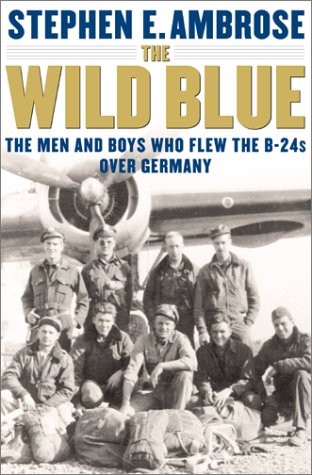
The Wild Blue: The Men and Boys Who Flew the B-24s Over Germany by Stephen E. Ambrose
Published: 2001
Rating: 3.5
Goodreads

A quick read that focused on a B-24 Liberator pilot and his crew, stationed in Italy and tasked with bombing strategic targets such Germany's oil fields.  That pilot was George McGovern, later US Senator and 1972 presidential candidate.

What I learned:

  • The B-24's took a tremendous amount of physical and emotional strength to fly.
  • Pilots needed to complete 35 missions before they could go home.
  • Many young pilots died during training and so were pre-war casualties.
  • McGovern was part of the 15th Air Force which was not as famous as the 8th Air Force stationed in England.
  • Good descriptions of formation flying, flak, faulty bomb releases.
  • Cabins were not pressurized so the crew needed oxygen and endured sub-zero temperatures during missions.
  • Fighter support was crucial to bomber's success.
  • Mussolini's Italy was decimated.


Audiobook: Flag of our Fathers by James Bradley
Published: 2000
Rating: 4
Goodreads

An engrossing book which focuses on 5 Marines and 1 Navy corpsman who were immortalized in the iconic picture of World War II - the raising of the American flag on Iwo Jima.

John Bradley, the author's father was the corpsman who, after returning from the war, became a husband, father, successful small business owner and community leader.  He did not, however, speak of his war experiences or of this photo with his family.  

After his father's death in 1994, they found a few boxes containing war memorabilia in his closet which prompted James' quest to learn more about the 6 men in the photo - before, during and after the war - which, of course, included his father.

Add "To Watch and Read" list:

  • Movie: Flag of Our Fathers directed by Clint Eastwood
  • Movie: Letters from Iwo Jima directed by Clint Eastwood
  • Flyboys: A True Story of Courage by James Bradley
  • The Imperial Cruise: The Secret History of Empire and War by James Bradley

With the Old Breed by E.B. Sledge
Published: 1981
Rating: 5
Goodreads

Excellent personal memoir about an enlisted Marine's experience in WWII, specifically the Battle of Peleliu and Okinawa.  It is an honest, gritty, unembellished portrayal of war, shouldered by the men on the front lines.  Some of the scenes are unbelievably horrific.

He is a main character in Tom Hanks/Steven Spielburg's HBO production, The Pacific.

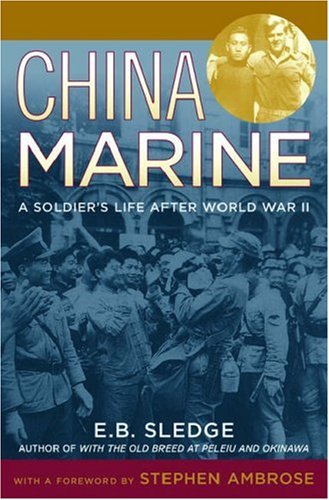
I plan to read his second book, China Marine which is a memoir about Marine life as part of the occupying forces in China.


We Band of Angels: The Untold Story of American Nurses Trapped on Bataan by the Japanese by Elizabeth Norman
Published: 1999
Rating: 5
Goodreads

The author stumbled upon references to the "Angels of Bataan and Corregidor" while researching her first book, Women at War: The Story of Fifty Military Nurses Who Served In Vietnam.  

These "angels" are the army and navy nurses who found their idyllic, island life on the Philippines turned upside-down on December, 1941 when Japanese bombs landed on Manila.  The US military under General Douglas MacArthur, woefully unprepared for enemy invasion,  retreated to the Bataan Peninsula for their first stand.  The nurses worked in two hospitals, set up in the jungle, not far from the front lines.  Before Bataan fell, the nurses were able to retreat to the Malinta Tunnel deep in Corregidor Island.

Unable to withstand the powerful Japanese forces, the army on Corregidor Island surrendered on May 6, 1942.  The POW nurses lived at the Saint Thomas Internment Camp (STIC) in Manila until liberated by MacArthur in February 1945, almost three years later.

What I learned:
  • Step-by-step fall of the Philippines to the Japanese.
  • "Europe First" policy left MacArthur to fend for himself, however with our decimated Navy at Pearl Harbor, it is unlikely the Philippines could have been saved. 
  • MacArthur's retreat to Corregidor Island earned him the bitter nickname: Dugout Doug
  • Bataan Death March
  • Nurse's grisly and harrowing work in jungle hospitals, close to the front lines of battle. 
  • Starvation, disease and death faced the nurses in STIC. 
  • The nurse's own "esprit de corps" saved them.
  • After liberation, the nurses, having lost an average of 30+ pounds were celebrities, used by the government to boost public support for the war. 
  •  Post homecoming - many felt disjointed, out-of-place, melancholic and depressed.
So glad I found this book on Amazon, in fact, it would make an inspiring movie.

Living Reed: A Novel of Korea by Pearl S. Buck
Published: 1963
Rating: 4
Goodreads

I am of Korean descent, but know very little of Korean history.  Partly because Asian history is not a focus in US schools but mostly because the subject of history, even that of my own race, was not of much interest.  That is, before reading Ken Follett's Winter of the World, a historical fiction novel about World War II.  Now, if one looked at my TBR pile, they would think I loved history.

So when I saw that Buck had written a novel about Korea, I ordered it from Amazon and read it within a couple of weeks.  Through the lens of one aristocratic family, Buck tells of Korea's tumultuous history from late 1800 - Korean War.

What I learned:
  • Political tension between Japan, China and Russia over Korea
  • Social tension between old and new religion/philosophy
  • 40+ years of brutal Japanese occupation
  • Courtship, marriage, role of women
  • Christianity in Korea
  • Teddy Roosevelt's foreign policy favored Japan over Korea
  • Communism vs democracy - a divided Korea
China Marine: An Infantryman's Life After World War II by E. B Sledge
Published: 2002
Rating: 4
Goodreads

Sledge continues his memoir of WWII, from learning about the Japanese surrender in Okinawa to being part of the occupying forces in Northern China, a "tinderbox of conflicting armed forces" to the difficult adjustment back to civilian life, typified by this scene which made it into HBO's The Pacific.

Sledge was signing up for school at Auburn University and trying to see if some of his Marine Corp training would qualify for college credit.  The girl behind the desk was getting flustered when she couldn't find course equivalency for weapons and tactics.
"Finally, in desperation, she slammed her pencil on the table and said in a loud, exasperated voice, "Didn't the Marine Corps teach you anything?!"  A gasp ran through the crowd, and you could have heard a pin drop.  I didn't lose my temper, but I realized that, like most civilians, war to this lady meant John Wayne or the sweet musical South Pacific.  
Slowly placing my hands on the table, aware that all eyes were on us, I said in a loud, calm, voice: "Lady, there was a killing war.  The Marine Corps taught me how to kill Japs and try to survive.  Now, if that don't fit into any academic course, I'm sorry.  But some of us had to do the killing - and most of my buddies got killed or wounded."  
In the preface, he writes about living with the "embedded trauma...the emotional equivalent of a sliver of steel shrapnel lodged near my heart."  I can relate to this.

A Marine's experience of the war, told in his own words, is so gripping.  I can feel him trying to express the inexpressible through the limited means of language.

Other memoirs to read:
  • Goodbye Darkness: A Memoir of the Pacific War by William Manchester
  • Red Blood, Black Sand: Fighting Alongside John Basilone from Boot Camp to Iwo Jima by Chuck Tatum
Audiobook - The Few: The American "Knights of the Air" Who Risked Everything to Fight in the Battle of Britain by Alex Kershaw
Published: 2006
Rating: 4
Goodreads

In 1940, while Britain was fighting for her life again Nazi Germany's quest to gain air superiority, it was illegal for any US citizen to fight for a foreign nation, even an ally.

Despite this policy, many American pilots joined the Royal Air Force, fought bravely alongside their aces and did their part to help save the RAF from destruction.  And with the loss of air domination, Hitler called off the invasion of England.

The reader of the audio book was very good - employing German, American, British and Australian accents when needed.  While driving in my car, I could envision the dogfights over the English countryside, her cities or the English Channel.   I could feel the pilot's intense relief in surviving another battle, along with the ensuing physical and emotional post-battle fatigue as well as the grief upon learning of a fellow pilot's death.

Other WWII books by Kershaw:
  • Escape From the Deep - about submarine U.S.S Tang
  • The Longest Winter - about the Battle of the Bulge
  • The Bedford Boys: One American Town's Ultimate D-Day Sacrifice
The Eagle Has Landed by Jack Higgins
Published: 1975
Rating: 2
Goodreads

This fictionalized account of Germany's attempt to kidnap Winston Churchill was uninteresting.  I now see that historical fiction can run the gamut on accuracy and authenticity.  I have to be more selective on what stories to read.


Tuesday, June 18, 2013

June 2013 Books


Ike: An American Hero by Michael Korda
Published: 2007
Rating: 4
Goodreads

Over the past 9 months I have been reading about WWII and the brave citizen soldiers who fought against Nazi Germany, Fascist Italy and Imperialist Japan.  This month, I wanted to learn more about the person who led the Allied forces to victory in Europe.  I also wanted to learn more about the post WWII era, (i.e. the Cold War).  Both goals were accomplished via two well-written biographies on the Supreme Commander of the Allied Forces in Europe and later, President of the United States from 1953 - 1961: Dwight D. Eisenhower.

Bullet points of interest that I jotted down in the front of the book:
  •  he had to deal with prima donna generals like Montgomery (huge jerk) and George Patton.
  •  Love triangle?  Ike, Kay Summersby and Mamie (wife)
  •  Korda makes constant comparisons to the Civil War such as Bastogne-Gettysburg and Ike-Grant.
  •  During the war, he was a huge chain smoker - up to 4 packs a day!
  • He is not buried in Arlington Cemetery, but rather in a small chapel on the grounds of the Eisenhower Presidential Library in his hometown of Abilene, Kansas.
Jobs after the war:
  • Leader of US Occupying Forces in Germany
  • Army Chief of Staff (replaced Marshall)
  • President of Columbia University
  • 1st Commander of NATO forces
  • President of the United States for 2 terms
Memoirs to add to the wish list?

By Eisenhower
  • Crusade in Europe 
  • At Ease: Stories I Tell to Friends
  • White House Years: Waging Peace, 1956-1961
By Churchill
  • 6 Volume History of World War II

Eisenhower: Soldier and President by Stephen E. Ambrose
Published: 1983
Rating: 4
Goodreads

This is the second Ambrose book I've read - the first was Band of Brothers.  I really like his writing: clear, concise and interesting.  He gives an unbiased accounting of Eisenhower's good and bad decisions as General and President.

What I learned:
  • Nixon was his VP for 8 years.  They had a formal, frosty relationship.  
  • Eisenhower ended the Korean War with an armistice.  He could not see a way to win without WWIII and a battle with the Russians.
  • He did not get sucked into other escalating areas such as Vietnam and Cuba.
  • President over 8 years of peace and prosperity.
  • He did not assert leadership during the Civil Rights Movement (I found this surprising).
  • U-2 incident (spy plane over Russia) which ended in international embarrassment. 
Other Ambrose books to read:
  • D-Day, June 6, 1944: The Climactic Battle of World War II
  • Citizen Soldiers
  • The Victors: Eisenhower and His Boys: The Men of World War II
  • Comrades: Brothers, Fathers, Heroes, Sons, Pals
  • The Wild Blue: The Men and Boys Who Flew the B-24s Over Germany

The Key to Rebecca by Ken Follett
Published: 1980
Rating: 3
Goodreads

A quick read about a ruthless German spy in Egypt feeding information to Rommel, a British spy-catcher and a beautiful Jewess.

This fictitious account reminds me of his other recently read works: Hornet Flight and Eye of Needle. 


The Odessa File by Frederick Forsyth
Published: 1972
Rating: 3
Goodreads

This book was referenced in Korda's biography on Ike, so I downloaded a sample, got hooked, bought the i-book and finished in a couple of days.

It is based on the true life account of the post-war activities of a ruthless SS officer, Otto Skorzeny, who set up "Odessa, the escape network for Nazi war criminals".


The Good Earth by Pearl S. Buck
Published: 1931
Rating: 5
Awards:  1932 Pulitzer Prize for Novel
Goodreads

I needed a break from WWII and felt hungry for good literary fiction.  I plucked this from my shelves and was hooked from the start.

The first book in her trilogy about the honest, hard-working farmer, Wang Lung and his family in pre-WWII China.  It was a best-seller in 1931 - 1932 and according to Wikipedia, the books apparently helped Americans consider the Chinese as allies in the upcoming conflict with Japan.

The second book of the trilogy, Sons was published in 1932 and the last book,  A House Divided in 1935.

Sons By Pearl S. Buck (# 2 in Good Earth trilogy)
Published: 1932
Rating: 3
Goodreads

As intimated by the title, this book focuses on the three sons of Wang Lung.  In contrast to the round characters in The Good Earth, the sons are flat and one-dimensional; therefore, not as interesting, hence the lower rating.

The social and historical context of pre-World War II China is what makes this trilogy fascinating.  The third son becomes a decorated soldier and with his inheritance, amasses an army and becomes a war lord in the north.  It is a very unstable time period as war lords constantly vie for more land, armies and power while revolution takes root and spreads in the south.

I know nothing of modern Chinese history so will probably read the third book in the trilogy to find out what happens to this family and their country.   I am already starting a list of books to read in the future:

  • Thunder Out of China by Theodore White
  • The Last Empress: Madame Chiang Kai-Shek and Birth of Modern China by Hannah Pakula
  • China Marine: An Infantryman's Life After World War II by E.B. Sledge

Audiobook: Unbroken: A World War II Story of Survival, Resilience and Redemption by Laura Hillenbrand
Published: 2010
Rating: 5
Goodreads
Author web site

WOW - what an awesome, inspiring story of Louis Zamperini, Olympic athlete (1936) turned US Army Air Force bombardier in WWII.

I did not know anything of this man's life before listening to the audiobook which made it that much more enjoyable.  His story needed to be told and I am glad Hillenbrand stumbled upon it while conducting research for her first book, Seabiscuit. 

What he endured during the war is truly mind-boggling, defies comprehension and elicited many verbal outbursts (OMG, no way, you've got to be kidding me, what? really?), complete with head shaking and slapping of the steering wheel while driving alone in my car.  Anyone viewing must've thought I was a bit loco.

I love Hillenbrand's writing - so clear, concise, strong and vivid.  One would never know she suffers terribly from chronic fatigue syndrome and is therefore completely housebound, living vicariously through her research and writing - read interview.

I've seen the movie Seabiscuit and loved it, but now want to read her book.  I am a big fan and can only hope that she finds another interesting subject worthy of her writing.


Helmet For My Pillow: From Parris Island to the Pacific by Robert Leckie
Published: 1957
Rating: 5
Goodreads

Another WOW book about a budding, 21-year old journalist Robert Leckie, who enlisted in the US Marine Corp in January 1942 and fought at Guadalcanal, Cape Gloucester and Peleliu where he was wounded by a blast concussion and evacuated to a field hospital.   He is one of the main characters in the Hanks/Spielburg HBO mini series, The Pacific.

He decided to write this memoir in 1951 after seeing the Broadway musical, South Pacific, in order to "tell the story of how it really was.  I have to let people know the war wasn't a musical." (wikipedia article).  He accomplished his goal.

A beautifully written literary memoir about how one goes from being a young patriotic man-boy to a well-trained killer/soldier, ready to fight a ferocious and brutal Japanese enemy - for his country, yes, but even more so, for his fellow Marines - esprit de corps.

Some of my favorite passages:
A soldier's pack is like a woman's purse: it is filled with his personality. 
And there is terror, coming from the interaction of trial and tedium: the first, shaking a man as the wind in the treetops; the second, eroding him as the flood at the roots.  Each fresh trial leaves a man more shaken than the last, and each period of tedium - with its time for speculative dread - leaves his foundations worn lower, his roots less firm for the next trial.
Upon seeing a detached hand:
I turned to go, and as I did, nearly stepped on someone's hand.  "Excuse me," I began to say, but then I saw that it was an unattached hand, or rather a detached one.  It lay there alone - open, palm upwards, clean, capable, solitary.  I could not tear my eyes from it.  The hand is the artisan of the soul.  It is the second member of the human trinity of head and hand and heart.  A man has no faculty more human than his hand, none more beautiful nor expressive nor productive.  To see this hand lying alone, as though contemptuously cast aside, no longer a part of a man, no longer his help, was to see way in all it wantonness; it was to see the especially brutal savagery of our own technique of rending, and it was to see men at their eternal worst, turning upon one another, tearing one another, clawing at their own innards with the maniacal fury of the pride-possessed. 
His descriptions of living and waging war in the jungle are unforgettable.

After publishing his memoir, he went on to be a prolific writer of military history.   The following are ones that I would like to read:

  • Strong Men Armed: The U.S. Marines Against Japan (1962)
  • Conflict: The History of the Korean War (1963)
  • Challenge for the Pacific: 6 Month Battle of Guadalcanal (1968)
  • Delivered From Evil: The Saga of WWII (1987)
  • The March to Glory: Battle of Chosin Reservoir (1990)
  • Okinawa: The Last Battle of WWII (1995)
  • Wars of America (1998)